Origins
Where does it come from?
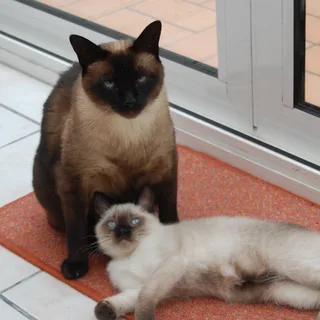
The Tonkinese is a breed created in North America in the 1960s by crossing the Siamese and the Burmese, two breeds with Southeast Asian roots. Its selection developed mainly in Canada and the United States, where its qualities as a companion cat quickly won people over. Long appreciated for its intermediate coat shades and its often aquamarine eyes, it is still today more widespread in Canada and the United States than in Europe, where it remains relatively rare.
Appearance
What does it look like?
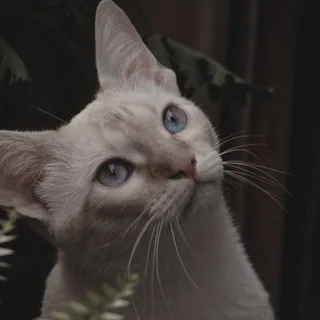
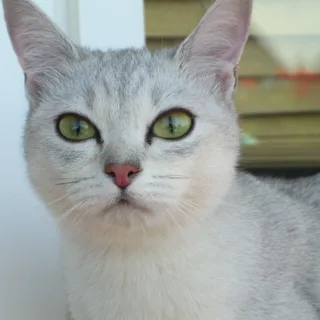
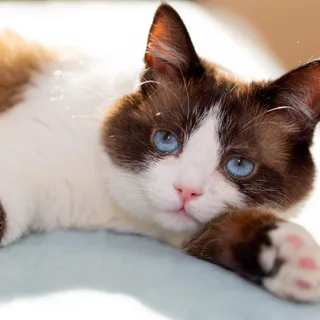
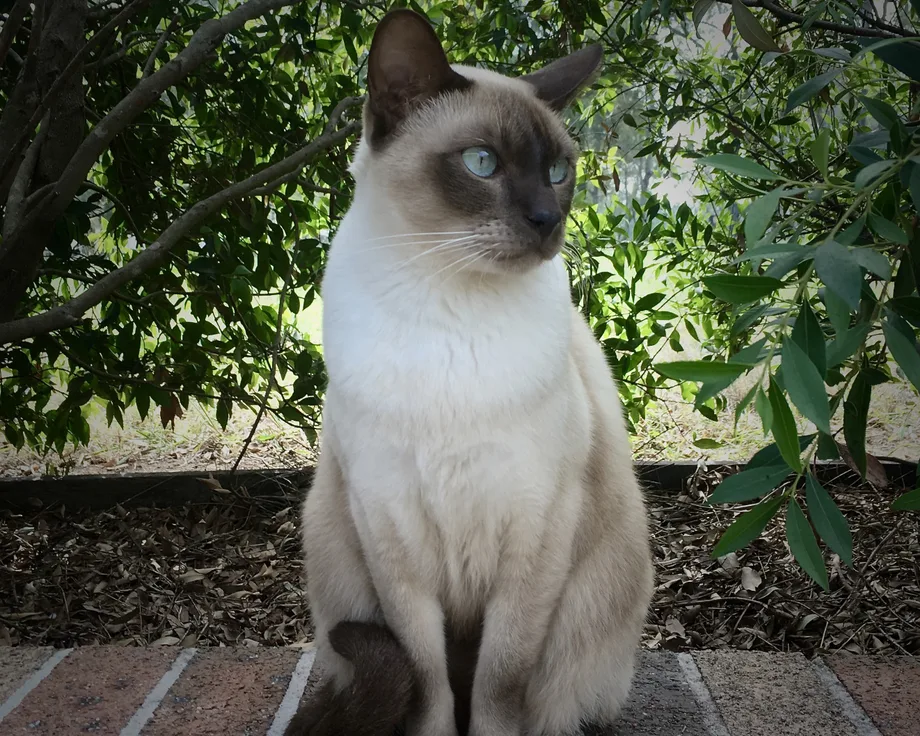
The Tonkinese is a medium-sized cat with an athletic, harmonious and well-muscled body, without heaviness. Its bone structure is fine, its head forms a softened triangle longer than it is wide, its ears are fairly large and slightly tilted forward, and its almond-shaped eyes can be blue, amber or aquamarine depending on the coat. Its coat is short, fine, silky and lying close to the body, with colourpoint, mink or sepia patterns accepted according to the standard.
Temperament
Temperament and personality
The Tonkinese is an expressive cat, very attached to its home and particularly close to its human. Affectionate, playful and intelligent, it readily seeks interaction and does not cope well with indifference or long absences. Its balanced temperament, inherited from the Siamese and the Burmese, makes it a warm, curious and adaptable companion.
Living together
Living with children and other pets
On a daily basis, the Tonkinese likes to take part in household life, follow its human and join in games. It generally gets along very well with children, other cats and pets when it is properly socialized. Active without being excessive, it needs stimulation, company and accessories to climb, observe and expend energy in order to avoid boredom.
Training
Training and socialization
The Tonkinese responds well to gentle, consistent training that is rich in interactions. Its quick-witted nature makes it possible to quickly teach it the rules of the house, the use of accessories and small stimulation exercises. Harsh methods should be avoided, because this sensitive cat progresses mainly thanks to routine, play and positive reinforcement.
Budget
Price and budget for the Tonkinese
The Tonkinese remains a fairly rare breed, which can influence the price level and the availability of kittens. Beyond the purchase price, it is important to assess the quality of the breeding, socialization, health monitoring and transparency about lineage before any adoption.
See cost breakdownHealth
Health at a glance
The Tonkinese is renowned for its great robustness and can live a long time when it benefits from an appropriate diet, regular veterinary follow-up and a stimulating environment. It rarely falls ill, but like any cat it must be monitored seriously throughout its life.
Prevention and things to watch forNutrition
Feeding your pet well
The Tonkinese’s diet must be adapted to its age, its activity, its body condition and its physiological status. As it is a lively and muscular cat, nutritional quality matters as much as the quantity served on a daily basis.
Our feeding adviceDid you know?
Fun facts and popularity
The Tonkinese is often described as a happy medium between the Siamese and the Burmese, both in appearance and temperament. It has long been associated with the mink coat and its highly sought-after aquamarine eyes, even though the standard also accepts other eye shades depending on the coats. Despite its obvious qualities as a companion cat, it still remains relatively rare in France.