Origins
Where does it come from?
Bred for several thousand years by the Arab tribes of the Middle East, the Saluki was used for hunting over vast territories and for the pursuit of game by sight. Individuals were then introduced into Europe, where a first official standard in the English language was established in 1923. The FCI definitively recognized the breed in 1966. Today, the Saluki remains appreciated for its nobility, its speed and its sporting abilities, notably in lure coursing.
Appearance
What does it look like?
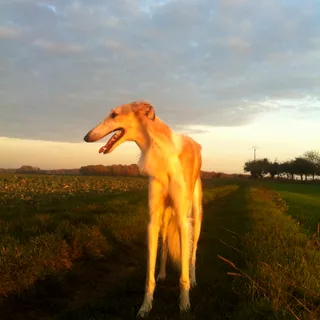
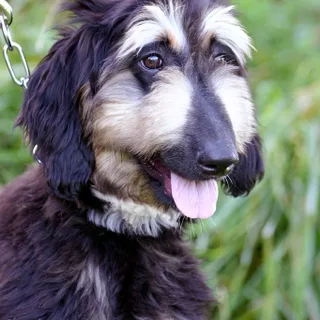
The Saluki is a harmonious, slender and distinguished dog, built for speed and endurance. Its head is long and narrow, its neck supple and muscular, its chest high and deep, and its underline clearly tucked up. Its coat is smooth, soft and silky, often with long feathering on the back of the limbs, the tail and sometimes the throat, although there is also a smooth-coated variety without feathering. All colors are accepted except brindle.
Temperament
Temperament and personality
The Saluki is a dignified, calm and intelligent dog, very attached to its home without being exuberant. It often appears reserved with strangers and has no marked natural aptitudes for guarding. Originally a hunting and racing dog, it retains a true independence of mind and a well-present chasing instinct.
Living together
Living with children and animals
On a daily basis, the Saluki is rather calm at home if its needs are met, but it needs long outings and real opportunities to run to stay balanced. Brief walks are not enough for it. Without suitable physical exercise, it can get bored and develop undesirable behaviors. It appreciates calm environments and owners able to channel its energy regularly.
Training
Training and socialization
Training the Saluki requires gentleness, consistency and patience. Recall must be worked on very early, because its speed and chasing instinct can lead it to move away quickly. It responds better to a respectful approach, positive reinforcement and short but regular sessions than to any form of coercion.
Budget
Saluki price & budget
The Saluki remains a relatively niche breed, which can influence its price depending on the availability of litters, the quality of the bloodlines and the seriousness of the breeding. The acquisition budget must always be put into perspective with maintenance and health expenses over the long term.
View cost breakdownHealth
Health at a glance
The Saluki is generally robust and has overall solid health. The breed is not among those most burdened with hereditary predispositions, but some individuals may develop cardiac conditions, endocrine disorders or certain cancers. Its particular sensitivity to anesthesia and to certain medications deserves specific vigilance.
Prevention & watch pointsDiet
Feed it well
The Saluki needs a balanced, digestible diet adapted to its age, its size and above all to its level of exercise. Like many sighthounds, it benefits from a good-quality ration capable of supporting its muscle mass without promoting unnecessary excesses.
Our feeding adviceDid you know?
Anecdotes and popularity
The Saluki is often considered one of the oldest breeds of domestic dogs. Also called the Persian Greyhound, it long accompanied the peoples of the Middle East for hunting in open terrain. Its refined silhouette and its performance in running still make it today a very appreciated dog in the disciplines of lure coursing.