A menu for every age
Needs change over time
Puppy : A growth diet for a medium-sized dog, highly digestible and divided into several meals, helps support harmonious development without excess.
Adult : The ration must be adjusted to the actual activity level to maintain a lean silhouette, good musculature and proper recovery after exertion.
Senior : In the older dog, the goal is to preserve muscle mass, mobility and digestive comfort with closer monitoring of weight and overall condition.
Which food?
Kibble, wet food, or home-cooked diet?
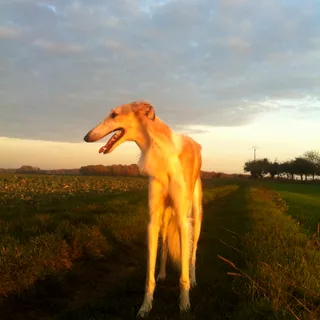
A premium complete diet, rich in quality animal proteins and well tolerated from a digestive standpoint, generally suits the Saluki very well. The exact choice must be adjusted according to activity, age, any neutering/spaying, and body condition.
Amounts
How much should you give?
The daily ration must be adapted to the dog's weight, physical expenditure and body condition, then divided into two meals. In this naturally slim sighthound, one avoids judging the ration solely by eye and relies mainly on the evolution of the silhouette and musculature.
| Weight | Daily amount | Meals/day |
|---|---|---|
| 13 - 17 kg | 270 - 370 g | 2 |
| 17 - 21 kg | 334 - 458 g | 2 |
| 21 - 25 kg | 362 - 497 g | 2 |
Change
Managing the food transition
Any dietary transition must be done gradually over several days to limit digestive upsets. In an athletic dog like the Saluki, it is useful to closely observe stool quality, appetite, and recovery after exertion during a change of food.
Hydration
Water: do not overlook it
Clean, fresh water must remain available at all times. After exertion, calm, divided rehydration should be encouraged, while avoiding meals too close to intense activity.
Little extras
Treats, in moderation
Treats should remain simple, digestible and given in moderation. They are particularly useful in the positive training of the Saluki, but must not unbalance a ration designed for a slender and athletic dog.
Good habits
For a top-notch bowl
- Split the ration into 2 meals per day.
- Adjust the quantities to the actual physical expenditure and the silhouette.
- Avoid intense exertion just before and just after meals.
- Regularly monitor body condition rather than trying to make it gain weight.
Never give
As with other dogs, chocolate, grapes, onion, garlic, xylitol, alcohol, cooked bones and very fatty foods should be avoided. These products can cause severe digestive disorders, poisoning or neurological, renal and hepatic damage.