Origins
Where does it come from?
Originally from the mountainous regions of Afghanistan, the Afghan Hound was mainly developed in Great Britain at the beginning of the 20th century. It quickly distinguished itself in dog shows, notably at Crystal Palace in 1907 in London. A former sight hound, it is today as much appreciated for its elegance as for its sporting abilities. The breed was definitively recognized by the FCI in 1961.
Appearance
What does it look like?
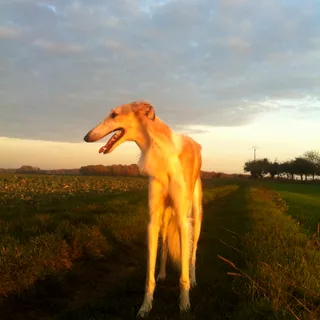
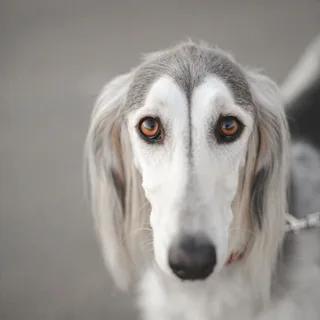
The Afghan Hound is a large, slender, powerful dog and very noble in its head carriage as well as in its gait. Its body is harmonious, with a strong neck, a straight and muscular back, a well let-down chest and a low-set tail. Its long, fine and silky coat largely covers the ears and limbs, with a characteristic topknot on the head. All colours and shades are permitted.
Temperament
Temperament and personality
Attached to its owner, the Afghan Hound often remains reserved with strangers and retains a true independence. It seeks the affection of its family without being intrusive and shows a dignified, sensitive and sometimes aloof temperament. Its hunting instinct remains very present, which requires vigilance outdoors.
Living together
Living with children and animals
This dog needs space, availability and a real daily physical expenditure. He appreciates long walks and especially the possibility of running freely in a secure place. Indoors, he can be calm if his needs are respected, but he tolerates poorly a life that is too sedentary or an environment that is too restrictive.
Training
Training and socialization
The training of the Afghan Hound must be firm, consistent and always respectful. It is a sensitive dog that reacts badly to brutality, but responds better to gradual learning based on reward and encouragement. Serious socialization from the youngest age helps to channel its natural reserve and independence.
Budget
Afghan Hound price & budget
The Afghan Hound is a breed generally offered at a high price level, due to its relative rarity, the selection of bloodlines and the maintenance work it involves. The acquisition cost must be considered along with grooming, feeding and health monitoring expenses.
View cost breakdownHealth
Health at a glance
The Afghan Hound generally has fairly good health, but certain fragilities deserve regular monitoring. The breed is notably predisposed to several eye conditions and to some endocrine, orthopedic and cardiac disorders. Its follow-up must also take into account its sensitivity to cold and its skin and ear care.
Prevention & watch pointsDiet
Feed it well
The Afghan Hound needs a high-quality diet, adapted to its age, its size and its activity level. The daily ration is generally divided into two meals to promote more comfortable digestion and better meet its needs.
Our feeding adviceDid you know?
Anecdotes and popularity
The Afghan Hound is one of the most recognizable breeds in the world thanks to its spectacular coat and its aristocratic appearance. First selected as a sight hound for hunting in difficult terrain, it then became a striking figure in show rings where the quality of grooming plays a major role.