Longevity
Life expectancy
Its usual life expectancy is between 10 and 12 years.
Build
A robust breed?
The breed benefits from good overall robustness and solid resistance. Its regular maintenance and its significant need for activity must nevertheless be respected to preserve its balance.
Watch points
What to watch for
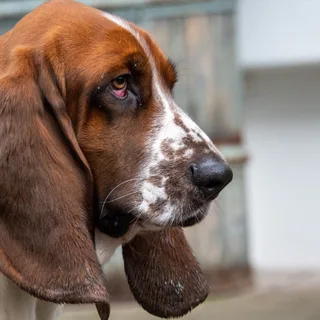
No specific predisposition is reported by the reference sheet, but the inside of the ears must be examined regularly in order to limit the risk of otitis and to remove any debris or parasites brought back from outings.
Otitis : The risk is never completely ruled out, notably due to the drooping ears, which must be inspected regularly.
Climate
Cold and heat tolerance
Its tolerance to cold as well as to heat is average. Its activities must therefore remain adapted to weather conditions, without excessive exposure to extreme temperatures.
Weight
Tendency to gain weight
Its tendency to gain weight is indicated as low. Sustained daily activity remains consistent with its energetic and sporty temperament.
Daily life
Good habits to keep it healthy
- Brush the coat twice a week.
- Inspect the skin after outings in the woods or brush.
- Regularly examine the inside of the ears.
- Quickly remove any debris and parasites spotted after a walk.
Vaccination
Grand Basset Griffon Vendéen vaccines: vaccination schedule
Which vaccines for a Grand Basset Griffon Vendéen? Like all cats, the Grand Basset Griffon Vendéen receives essential vaccines from 8 weeks old: Typhus (panleukopenia) and Coryza. The kitten primary vaccination for Grand Basset Griffon Vendéen is given in several injections 4 weeks apart, followed by a first booster at 1 year, even if it lives in an apartment. Depending on its lifestyle (outdoor access, multi-cat household, shows, travel), your veterinarian may complete the protocol with vaccines against Feline leukemia (FeLV), Rabies and Chlamydiosis.
| Vaccine | Primary series | First booster | Then | Who for? |
|---|---|---|---|---|
Typhus (panleukopenia)Core Feline panleukopenia (cat parvovirus) | 8 weeks · 12 weeks · 3 months | 1 year | every year | All pets |
CoryzaCore Feline herpesvirus and calicivirus | 8 weeks · 12 weeks · 3 months | 1 year | every year | All pets |
Feline leukemia (FeLV)Lifestyle-based Feline leukemia virus | 8 weeks · 12 weeks | 1 year | every year | Outdoor cats, cats living in a group or in a cattery |
RabiesLifestyle-based Rabies | 12 weeks | 1 year | every year | Mandatory for travel abroad, cat shows and most boarding kennels |
ChlamydiosisLifestyle-based Chlamydia felis (contagious conjunctivitis) | 8 weeks · 12 weeks | 1 year | every year | Cats living in groups, catteries, show cats |
Adult Grand Basset Griffon Vendéen vaccine boosters are annual for cat flu and leukemia if it goes outdoors; for panleukopenia, a booster every three years is often sufficient after the first booster. Your veterinarian will adjust the schedule to your cat’s lifestyle.
Which boosters for your Grand Basset Griffon Vendéen?
Enter your companion’s age: we list the vaccines to do now and the next boosters.
Adopting well
Adopting a healthy Grand Basset Griffon Vendéen
Regularly examine the skin and the inside of the ears, particularly after outings in the woods or brush, in order to spot and quickly remove debris and parasites.
This information is provided for guidance only and does not replace a veterinarian’s advice. If you have any concerns about your pet’s health, consult a professional.