A menu for every age
Needs change over time
Puppy : Growth food adapted to the expected size, divided into three meals, without unnecessary calcium supplementation.
Adult : Controlled ration in two meals, adjusted to ideal weight and actual activity.
Senior : Digestible food, possibly less energy-dense, with joint and dental monitoring.
Which food?
Kibble, wet food, or home-cooked diet?
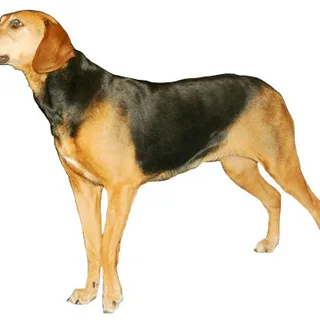
Premium kibble rich in quality proteins suits the Eurohound well. The ration must be adapted to the intensity of the effort, to age, to body condition and to sporting objectives or simple companionship.
Amounts
How much should you give?
Daily quantities vary greatly depending on the dog's weight and especially on its actual activity. A companion Eurohound will not have the same needs as a dog involved in canicross, in bikejoring, or in sled races.
| Weight | Daily amount | Meals/day |
|---|---|---|
| 16 - 21 kg | 323 - 443 g | 2 |
| 21 - 25 kg | 362 - 497 g | 2 |
| 25 - 30 kg | 427 - 585 g | 2 |
Change
Managing the food transition
Any change in diet must be gradual over several days in order to limit digestive upsets. In an athletic dog, the transition deserves particular attention to preserve appetite, bowel movements and the quality of recovery.
Hydration
Water: do not overlook it
Fresh water must always be available, with increased vigilance before and after exertion. Good hydration is essential for this active dog, especially in mild to warm weather or during repeated training sessions.
Little extras
Treats, in moderation
Treats can be useful in training and motivation, provided they remain moderate and integrated into the overall ration. It is preferable to favor simple and digestible rewards.
Good habits
For a top-notch bowl
- Weigh the ration each day rather than serving by volume.
- Avoid intense exertion just before and after the meal.
- Deduct training treats from the daily ration.
Never give
As with other dogs, it is necessary to avoid in particular chocolate, onion, garlic, grapes, avocado, alcohol, cooked bones and foods that are too fatty or very salty, as they can cause digestive or neurological disorders or sometimes serious poisoning.