Origins
Where does it come from?
The Greyster is a breed developed in Norway for canine traction and speed sports. It comes mainly from the cross between the Greyhound and the German Shorthaired Pointer, with the aim of obtaining a dog that is both fast, powerful, enduring and able to work as a team with humans. Its rise is closely linked to disciplines such as ski-joring, canicross and bikejoring, where it has distinguished itself by its explosiveness over short distances.
Appearance
What does it look like?
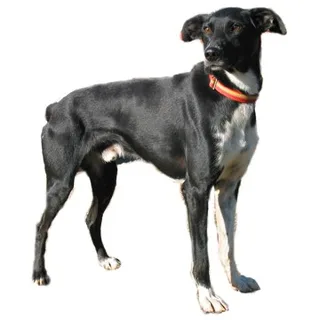
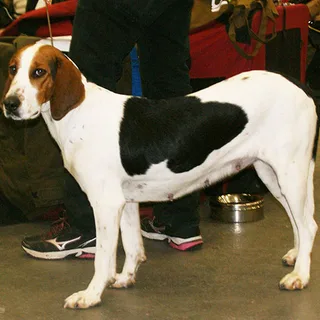
The Greyster is an athletic, muscular and long-legged dog, with a lean and sporty silhouette. Its head is long, its ears are medium-length and drooping, its eyes are lively and expressive, and its tail is carried in line with the back or slightly lowered depending on its attention. Its coat is short and its coat color can be solid, black or brown, or white with black or brown markings or speckling.
Temperament
Temperament and personality
The Greyster is affectionate, sociable and generally pleasant to live with with its family. It combines great energy outdoors with rather calm behavior at home when it has been able to get enough exercise. Playful and close to its owner, it can also retain a hunting instinct inherited from its ancestry, which requires vigilance with small animals.
Living together
Living with children and animals
On a daily basis, the Greyster needs sustained and regular physical activities. He copes poorly with a life that is too sedentary or a cramped environment, and thrives more in a setting offering space, movement and long outings. Well stimulated, he is stable, friendly and willing, but a lack of exercise can make him difficult to manage.
Training
Training and socialization
The Greyster learns rather well thanks to its intelligence, its desire to please and its taste for play. A positive, consistent and constant education gives very good results with this sensitive dog, which responds better to fair firmness than to constraint. The basics of obedience, recall and the management of excitement must be worked on early, especially in a dog as athletic as this one.
Budget
Greyster price & budget
The Greyster remains a fairly confidential breed, especially appreciated in sporting circles. Its purchase price mainly depends on the rarity of the line, the selection work, the sought-after sporting aptitude and the seriousness of the breeding.
View cost breakdownHealth
Health at a glance
The Greyster is overall a robust and resilient dog, especially when it benefits from progressive training, a suitable diet and regular veterinary follow-up. Like many medium to large dogs with an athletic profile, it nevertheless deserves particular attention to the locomotor system.
Prevention & watch pointsDiet
Feed it well
The Greyster’s diet must support a very active dog, with quality intake and a good balance between proteins, lipids, vitamins and minerals. Needs vary greatly depending on age, size, season and above all the intensity of physical activity.
Our feeding adviceDid you know?
Anecdotes and popularity
The Greyster is particularly sought after in canine speed sports, notably canicross, bikejoring and ski-joring. The breed has made a name for itself alongside renowned athletes such as Lena Boysen, Igor Tracz and Antony Le Moigne, which clearly illustrates its very marked orientation toward performance and athletic work.