Origins
Where does it come from?
The Schiller Hound descends from hunting dogs from the Kaflas estate. Its origins seem to combine contributions from southern Germany, Swiss and British hunting dogs, notably Harriers. The breed was established in Sweden from two subjects presented at the country's first dog show in 1886, Tamburini and Ralla I, belonging to the farmer Per Schiller, from whom it has kept the name. It was recognized by the Swedish Kennel Club in 1907.
Appearance
What does it look like?
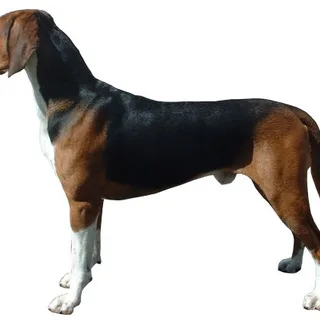
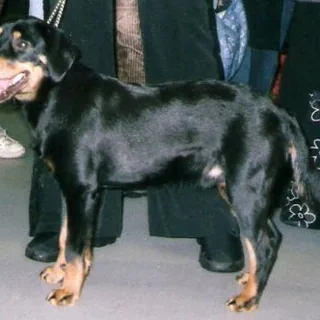
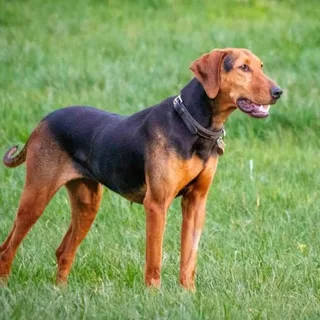
The Schiller Hound is a medium-sized hunting dog, slightly longer than tall, well proportioned and solidly muscled. Its head is elongated, its ears are supple and pendulous, and its dark brown eyes express liveliness. Its coat is short, harsh and lying close against the body, with a fawn coat marked by a well-defined black mantle on the back, the sides of the neck and the top of the tail.
Temperament
Temperament and personality
Balanced, lively and very attached to its handler, the Schiller Hound is above all a hunting dog appreciated for its endurance and its voice. It works mainly on hare and fox, alone with its owner. Despite this hunter’s temperament, it is not asocial and cohabits rather correctly with its fellow dogs, while remaining reserved with strangers.
Living together
Living with children and animals
This dog needs to exercise regularly and likes to cover long distances in natural terrain. It prefers environments close to nature to city life and tolerates inactivity poorly. Its liveliness and hunting instinct require particular vigilance during outings, especially in open spaces.
Training
Training and socialization
Its training requires consistency, firmness and gentleness, as with many scent hounds. Recall must be worked on very early and maintained regularly, because its sense of smell and its interest in trails can take over. It is better suited to owners already familiar with active and independent dogs.
Budget
Schiller Hound price & budget
The price of a Schiller Hound varies depending on the lineage, the seriousness of the breeding, health screenings and socialization. The maintenance budget (food, veterinary care, training) often exceeds the purchase price over time.
View cost breakdownHealth
Health at a glance
The Schiller Hound is generally considered a hardy and solid breed. Its daily care is simple, but its active life and scenthound profile require careful monitoring of the joints, ears and overall condition after outings.
Prevention & watch pointsDiet
Feed it well
The Schiller Hound needs a balanced, good-quality diet, adjusted to its age, its size and above all to its activity level. A very active dog will not have the same needs as an individual living more calmly.
Our feeding adviceDid you know?
Anecdotes and popularity
The name of the breed comes from Per Schiller, the Swedish breeder associated with its initial development. Although it is recognized by the FCI, the Schiller Hound remains mainly known in its country of origin and remains quite rare outside Scandinavia.