Origins
Where does it come from?
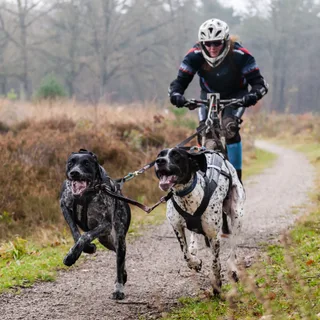
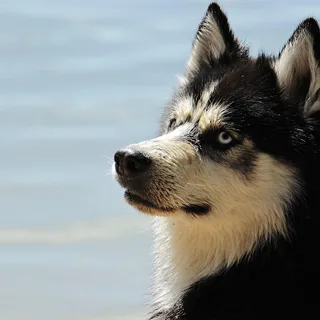
The Eurohound was developed in Scandinavia from the 1990s onwards, notably in Sweden, to obtain a highly competitive dog. It comes from crosses between the Alaskan Husky and pointers, especially the German Shorthaired Pointer. This selection aimed for qualities of speed, explosiveness and endurance useful in sled dog racing, in canicross and in bikejoring, particularly in sprint and mid-distance formats.
Appearance
What does it look like?
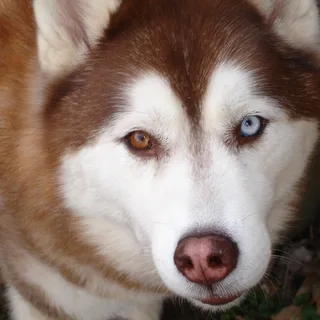
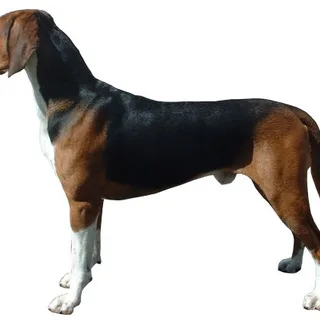
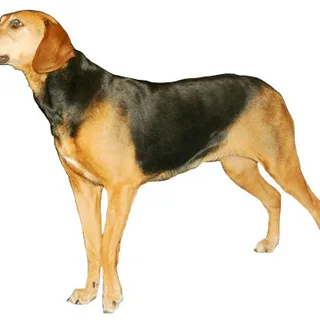
The Eurohound is a medium-sized dog with an athletic and muscular body, built in a rather rectangular format. Its head is long, its ears are semi-drooping and of medium length, and its long tail is carried low or at mid-height. Its coat is short, and its color is often black with or without shades and light markings, sometimes spotted over more or less extensive areas. The eyes are generally dark brown or blue, sometimes with heterochromia.
Temperament
Temperament and personality
Active, lively and playful, the Eurohound is also extremely sociable. It generally lives very well with its fellow dogs and enjoys the presence of its family. At home, it knows how to be calm when it has been able to get enough exercise. It is pleasant to live with, close to its humans and often good with children, while still being able to retain a hunting instinct inherited from its pointer-type ancestors.
Living together
Living with children and animals
The Eurohound needs exercise, space and a daily routine structured around activity. It copes poorly with prolonged inactivity and thrives more in an environment where it can run, play and work regularly. It clearly prefers a house with a large secure garden to apartment living, even if it can be calm at rest after sufficient exertion.
Training
Training and socialization
The education of the Eurohound requires consistency, regularity and a positive approach. Rewards, play and motivation to effort give good results with this sporty dog. Early socialization is useful to strengthen its adaptation to life in the community and to better manage a possible hunting behavior toward small animals.
Budget
Eurohound price & budget
The purchase price of the Eurohound remains relatively moderate for a sporting dog, but the real budget then depends above all on the level of activity, equipment, veterinary follow-up and the quality of the diet.
View cost breakdownHealth
Health at a glance
The Eurohound is generally a robust dog, well suited to an active life and sustained physical exertion. As with other sporting dogs from working lines, its overall condition depends greatly on the quality of training, diet, recovery, and veterinary follow-up.
Prevention & watch pointsDiet
Feed it well
The Eurohound needs good-quality food, suited to its level of activity. A sporting dog by nature, it benefits from a substantial ration in terms of protein and energy when its expenditure is high.
Our feeding adviceDid you know?
Anecdotes and popularity
The Eurohound is a breed whose history and standard deserve to be known before acquisition, in order to choose a breeding kennel consistent with the intended use.