Origins
Where does it come from?
Although its patronage is attributed to Great Britain, the Tibetan Spaniel has its roots in the mountainous regions of Tibet, where similar dogs already existed nearly two millennia ago. It long lived alongside Buddhist monks in temples, where it played a role as a companion and alert dog by signaling any intrusion. Despite its name, it has never been selected as a hunting dog. The first specimens arrived in England at the end of the 19th century, then the breed spread later to the United States. The FCI recognized it definitively on 22 August 1961.
Appearance
What does it look like?
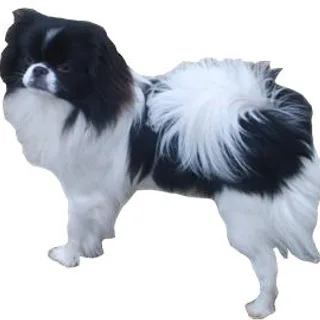
The Tibetan Spaniel is a small, well-proportioned dog, inscribed in a rectangle, with a proud gait and a harmonious silhouette. Its head, small in relation to the body, has a slightly domed skull and a marked stop. The eyes are oval, dark brown and very expressive, the ears are set high, pendant and furnished with fringes. The coat is medium-length, silky and flat, shorter on the face and the front of the limbs, with a more marked mane in the male. The tail, set high, is carried gaily in a loop over the back and well furnished with hair.
Temperament
Temperament and personality
The Tibetan Spaniel is a self-confident, alert and very intelligent dog. He is loyal to his family, cheerful on a daily basis and pleasant to live with, while keeping a certain independence. Often reserved with strangers, he retains a good alert instinct without being a powerful guard dog. His balance is based on a close relationship with his humans and on careful socialization.
Living together
Living with children and animals
This small dog adapts very well to apartment living and appreciates a calm environment where it can stay close to its owners. It is not a great athlete, but it needs daily walks to stay well in its paws and in its head. At home, it knows how to be peaceful, observant and attentive to what is happening around it. Its tendency to signal noises or visits requires a consistent educational framework.
Training
Training and socialization
Education and socialization must begin early in order to channel its natural reserve and encourage good habits. The Tibetan Spaniel learns well when firmness, consistency and playful sessions are combined. Harsh methods should be avoided, as they may hinder its cooperation. Simple work on recall, calmness and managing visitors helps it become a very pleasant companion.
Budget
Tibetan Spaniel price & budget
The purchase price of a Tibetan Spaniel varies mainly depending on the quality of the bloodline, the reputation of the breeding kennel, the socialization work and the seriousness of health monitoring. The initial cost should never be the only criterion, because the puppy's balance and the breeder's transparency matter as much as its pedigree.
View cost breakdownHealth
Health at a glance
The Tibetan Spaniel is considered a hardy and generally robust dog, with good longevity for its size. The breed is nevertheless not free from hereditary predispositions, notably on the orthopedic, ocular and urinary levels. Regular veterinary monitoring and serious selection of breeding dogs contribute greatly to preserving its health.
Prevention & watch pointsDiet
Feed it well
The Tibetan Spaniel needs a complete, digestible and well-balanced diet, adapted to its small size and its moderate activity level. The quality of the ingredients matters more than the quantity, because this dog must meet its needs without gaining unnecessary excess.
Our feeding adviceDid you know?
Anecdotes and popularity
Despite its name, the Tibetan Spaniel is not a hunting spaniel. It is historically linked to Tibetan monasteries, where it mainly served as a small alert dog alongside larger guard dogs. It thus shares ancient origins with other small Asian breeds such as the Lhasa Apso, the Shih Tzu or the Pekingese.