Origins
Where does it come from?
Despite its name, the Tibetan Terrier is not a true terrier. Originating from Tibet, it was long used as a guard and herding dog, notably with merchants traveling toward China. The breed was then developed in Great Britain and its introduction in Europe accelerated in the 1930s under the impetus of Dr Agnes Greig. It was officially recognized by the FCI in 1957.
Appearance
What does it look like?
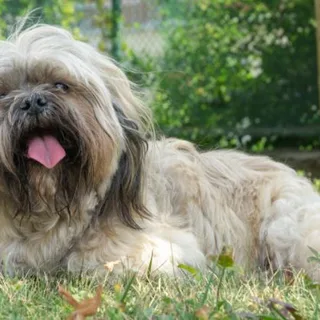
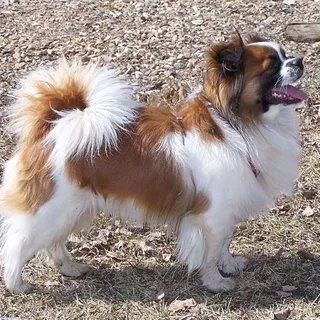
The Tibetan Terrier is a medium-sized dog, robust and well proportioned, whose body overall fits into a square. Its head carries an abundant covering of hair, its expression is determined and its dark gaze is lively. Its coat is long, abundant, fine without being silky or woolly, straight or slightly wavy, with a fine and woolly undercoat.
Temperament
Temperament and personality
Intelligent, loyal and very sociable, the Tibetan Terrier is a lively and affectionate dog, generally not very aggressive. He is attached to his family, good with children and often cheerful on a daily basis. He nevertheless remains wary of strangers and can have a stubborn side that requires consistency.
Living together
Living with children and animals
The Tibetan Terrier adapts well to family life and can live in an apartment provided it benefits from regular outings. Gentle and clean in the house, it also appreciates being able to move around in a secure space. Its natural liveliness and its tendency to signal the presence of strangers can make it quite a barker depending on the context.
Training
Training and socialization
His training must be firm, consistent and caring, without a power struggle. Intelligent, he learns all the better when he understands the usefulness of the exercise and when his interest is stimulated through play and encouragement. His lightness of character must not make one forget his stubborn side, which requires regularity and patience.
Budget
Tibetan Terrier price & budget
The purchase price of the Tibetan Terrier varies mainly according to the quality of the lineage, the seriousness of the breeding, the screenings carried out and the puppy's intended purpose. You must also anticipate the maintenance, health and grooming costs linked to its abundant coat.
View cost breakdownHealth
Health at a glance
The Tibetan Terrier is overall a hardy and resilient dog. Its solid build allows it to cope well with an active lifestyle and cool weather conditions, but this does not rule out regular veterinary follow-up and vigilance regarding certain conditions known in the breed.
Prevention & watch pointsDiet
Feed it well
The Tibetan Terrier needs a complete and well-balanced diet, adapted to its medium size, its activity level and its age. The quality of protein intake and portion control are important to maintain its muscle mass and the quality of its coat.
Our feeding adviceDid you know?
Anecdotes and popularity
The Tibetan Terrier owes its name above all to its country of origin rather than to a relationship with terriers. Historically, it was considered a precious dog in its Tibetan cradle and also performed guarding and herding functions before becoming a much appreciated companion.