Origins
Where does it come from?
The Norwegian Lundehund, also called Norsk Lundehund, is a very ancient breed from the coasts of Norway. It was selected for centuries for puffin hunting on steep cliffs and in rocky passages that are difficult to access. The first written accounts of its use date back several centuries. With the evolution of hunting techniques and the protection of the puffin, its utilitarian role has greatly diminished, but passionate breeders have enabled the preservation of this rare breed.
Appearance
What does it look like?
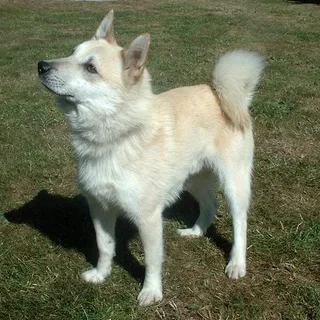
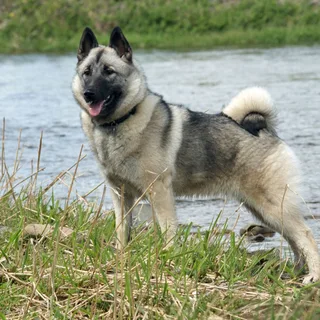
The Norwegian Lundehund is a small Spitz-type dog, slightly longer than tall, with a supple and light silhouette. Its head is wedge-shaped, its triangular ears are erect and its eyes are slightly oblique. Its double coat is dense, with a harsh texture in the outer coat and a softer undercoat, which protects it well from the cold. The breed is famous for its anatomical peculiarities, notably its very mobile forelegs and its six-toed feet, useful for moving along steep coasts.
Temperament
Temperament and personality
Alert, energetic and attached to its owner, the Norwegian Lundehund has a balanced temperament. It retains a strong hunting instinct and real liveliness, while remaining pleasant to live with when it benefits from a suitable environment. It enjoys interaction with its family, without being overly demonstrative, and may be a little reserved in the face of novelty if its socialization has been insufficient.
Living together
Living with children and animals
This dog needs movement, discoveries and an environment that allows it to exercise regularly. Despite its small size, it is not ideal in a space that is too confined if it lacks outings and stimulation. Curious and active, it likes to explore, play and take part in household life. Its balance relies on a routine rich in physical activity, mental occupations and contact with its humans.
Training
Training and socialization
His training must be carried out with consistency, calm and firmness, without brutality. The Norwegian Lundehund responds better to positive, structured and consistent methods, combined with early socialization. It is important to channel his liveliness and natural independence from the youngest age in order to obtain a reliable companion, comfortable in his own skin and pleasant on a daily basis.
Budget
Norwegian Lundehund price & budget
The Norwegian Lundehund is a rare breed, which strongly influences its purchase price. The seriousness of the breeding, the quality of health monitoring, the availability of bloodlines and the rarity of the breed on the market matter more than the simple aesthetic aspect.
View cost breakdownHealth
Health at a glance
Overall, the Norwegian Lundehund is a rather robust dog, well adapted to cold climates thanks to its double coat. Vigilance mainly concerns certain digestive disorders found in the breed, as well as a few orthopedic problems. Regular veterinary follow-up, a well-tolerated diet and good monitoring of the general condition are essential to preserve its quality of life.
Prevention & watch pointsDiet
Feed it well
The Norwegian Lundehund needs a complete, digestible, good-quality diet, adapted to its size, its age and its activity level. Given the digestive sensitivity described in the breed, regularity and the choice of well-tolerated ingredients are particularly important.
Our feeding adviceDid you know?
Anecdotes and popularity
The Norwegian Lundehund is among the rarest dog breeds. It is mainly known for its distinctive anatomical characteristics, in particular its six functional toes on the front feet and its great joint flexibility, inherited from its historical specialization on the Norwegian cliffs. Its other name, Norsk Lundehund, directly recalls its country of origin and its former role as a puffin hunter.