Origins
Where does it come from?
The Norwegian Buhund is an ancient breed whose ancestors already accompanied the Vikings, both during their travels and in everyday life. In Norway, it long served as a farm dog, herding dog and livestock guard, as recalled by the word bu, which means farm. The breed was also used in Iceland for work with flocks. Even today, it retains this versatility between usefulness, vigilance and companionship. The FCI recognized the breed definitively on 25 February 1963.
Appearance
What does it look like?
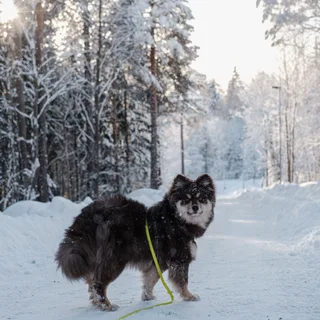
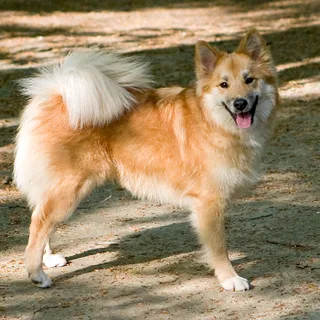
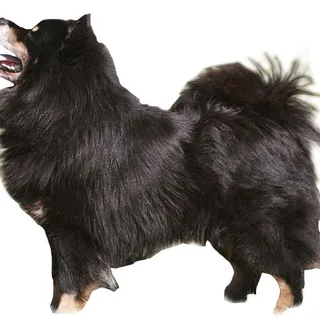
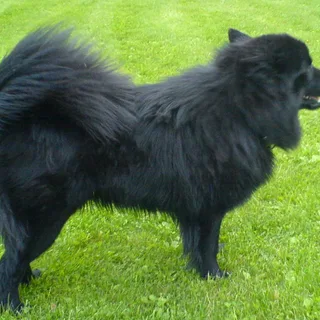
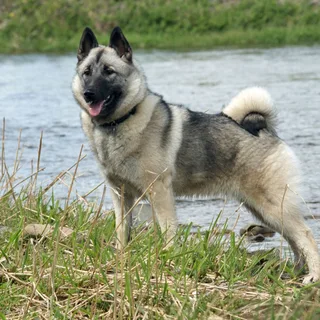
The Norwegian Buhund is a Nordic Spitz-type dog with a powerful and well-built body. Its neck is strong and of medium length, its back and loin are short and straight, and its chest is well let down. The head is cone-shaped, with an almost flat skull, a pronounced stop and a black nose. The eyes are oval and dark, the ears of medium size, erect and pointed. The tail, well furnished, is curled over the back. The coat is double, with a thick, harsh, smooth and close-lying outer coat, over a soft undercoat. The color is wheaten or biscuit, or black.
Temperament
Temperament and personality
Balanced, courageous and lively, the Norwegian Buhund combines the energy of a working dog with a genuine attachment to its family. It is affectionate, playful and sensitive, while keeping a degree of independence typical of Spitz dogs. Its natural vigilance makes it a good alert dog, without being excessively aggressive. It generally appreciates children and can live properly with its fellow dogs when it is well socialized.
Living together
Living with children and animals
The Norwegian Buhund needs an active life and long, frequent outings to stay well on its feet. It likes to run, play and take part in family life. Its high energy level makes it more comfortable in an environment offering space, but it can live in the city if its physical and mental needs are truly met. Its barking level is moderate and it can be attentive, responsive and sometimes a little independent on a daily basis.
Training
Training and socialization
The Norwegian Buhund is best trained with positive methods based on play, reward and consistency. Its desire to please helps learning, but its sensitivity and its ability to get distracted require patience and varied sessions. Early socialization, a consistent framework and activities that stimulate its intelligence are particularly useful for channeling its energy.
Budget
Norwegian Buhund price & budget
The Norwegian Buhund remains a fairly rare breed, which can influence its purchase price. The difference between puppies depends mainly on the seriousness of the selection, the health monitoring of the breeding dogs, the pedigree and the availability of the breed in the desired region.
View cost breakdownHealth
Health at a glance
The Norwegian Buhund is overall a robust dog, well protected against the cold thanks to its double, dense coat. Like many medium-sized working breeds, it nevertheless deserves serious monitoring on the orthopedic and ocular levels, as well as particular attention to certain hereditary disorders. Good breeding selection, stable weight and regular activity contribute greatly to preserving its health.
Prevention & watch pointsDiet
Feed it well
An active dog, the Norwegian Buhund needs a complete, balanced diet with well-measured amounts of proteins, vitamins and minerals. The ration must support its energy level without promoting weight gain, with adjustments according to age, physical condition and exercise intensity.
Our feeding adviceDid you know?
Anecdotes and popularity
The term bu refers to the farm in Scandinavian languages, which recalls the historical role of this dog alongside Norwegian breeders. The Norwegian Buhund is part of the ancient Nordic breeds linked to rural life and pastoralism. Still not very widespread outside Scandinavia, it nevertheless remains appreciated for its versatility, its hardiness and its family temperament.