Origins
Where does it come from?
The Berger de Bergame is a very ancient breed originating from the Bergamasque Alps, in Italy. Already used by shepherds in Roman times, it specialized in herding and guarding flocks of sheep on demanding mountainous terrain. The breed almost disappeared after the Second World War, but Doctor Maria Andreoli largely contributed to its preservation thanks to rigorous breeding. Today, this dog is still used as a companion, guardian, therapy dog and mountain rescue assistant. The Fédération Cynologique Internationale recognized it definitively on 23 February 1956 in group 1.
Appearance
What does it look like?
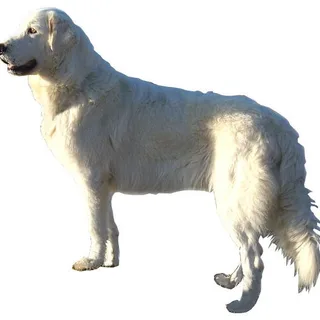
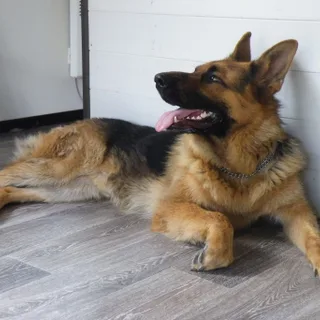
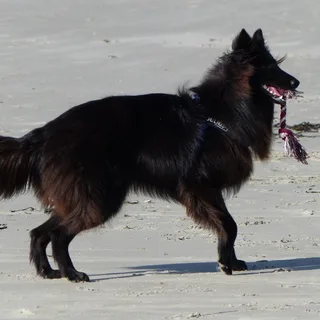
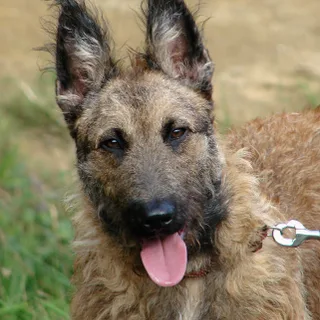
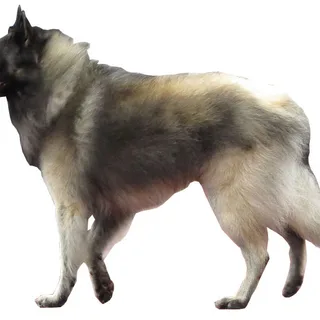
Large rustic and powerfully built dog, the Bergamasco Shepherd has a body that can be inscribed in a square, a straight and muscular back, a broad croup and a deep chest. Its well-proportioned head has a broad and rounded forehead, a muzzle as long as the skull and developed jaws. Its large brown eyes express gentleness and attentiveness, while its triangular, semi-drooping ears are set high. Its tail, thick at the base then tapering, is carried saber-like at rest. Its long and abundant coat forms characteristic felted locks, particularly on the trunk and limbs. The coat allows the different shades of grey, with or without patches, as well as light fawn and solid black.
Temperament
Temperament and personality
Intelligent, determined and vigilant, the Bergamasco Shepherd has a balanced and patient temperament. He is attached to his owner, protective of his home and generally pleasant with the whole family, especially with children. Never naturally aggressive or fearful, he can however be reserved with strangers, sometimes shy and occasionally stubborn. His sense of observation and his herding dog heritage make him a reliable companion when he benefits from careful socialization.
Living together
Living with children and animals
This outdoor dog thrives above all in the countryside or in an environment offering large open spaces. It needs long frequent walks, runs and daily activities to remain balanced. Very close to its owner, it copes poorly with a city life lacking in stimulation and requires a regular presence. Its docility and intelligence allow it to succeed in various canine activities, while its instinct for vigilance drives it to naturally watch over its territory.
Training
Training and socialization
Training must begin early, at the same time as varied socialization. His learning ability is remarkable, but his determined temperament requires a coherent, firm and consistent framework. A gentle approach that respects his sensitivity gives better results than constraint. Short, motivating and regular sessions, combined with useful activities, maintain his desire to cooperate and limit his occasional tendency to stubbornness.
Budget
Bergamasco Sheepdog price & budget
The purchase price depends in particular on the origin of the litter, the pedigree, the quality of health screenings, the reputation of the breeding kennel and the puppy’s intended purpose. The relative rarity of the breed in France can also influence availability and travel expenses.
View cost breakdownHealth
Health at a glance
The Bergamasco Shepherd is a robust dog, shaped by work in the mountains and little associated with pathologies strictly specific to the breed. Its good constitution does not, however, dispense with regular veterinary follow-up, suitable activity and monitoring of the joints, eyes, ears and skin under its dense coat.
Prevention & watch pointsDiet
Feed it well
Its diet must meet the needs of a large active dog without excess energy. The ration varies greatly depending on its age, its activity, its physiological condition and its outdoor life; it must therefore be adjusted to body condition rather than to the weight alone indicated on the packaging.
Our feeding adviceDid you know?
Anecdotes and popularity
The Berger de Bergame is also called the Bergamasco Shepherd. Its very distinctive coat is not a simple ornament: its thick locks have historically protected it from cold, humidity and the harsh conditions of the Alps. Despite its singular appearance, the breed remains fairly little known outside Italy. Its abilities are not limited to herding, since it has also distinguished itself in animal-assisted therapy and mountain rescue.