Origins
Where does it come from?
The Berger Belge Laekenois owes its name to the castle of Laeken, where it counted among the favorite dogs of Queen Marie-Henriette of Belgium. Considered as the oldest and rarest of the four varieties of Belgian Shepherd, it is said to originate from Boom, in the province of Antwerp. It remains little widespread outside Belgium and the Netherlands. The Fédération Cynologique Internationale recognized it definitively on 1 January 1956 under number 15, within group 1. The common standard for Belgian Shepherds currently cited by the reference sheet was published on 13 March 2001.
Appearance
What does it look like?
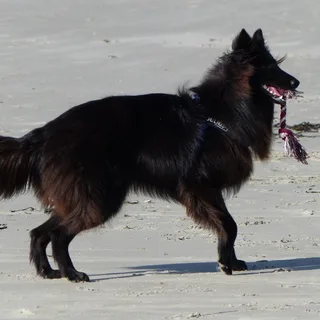
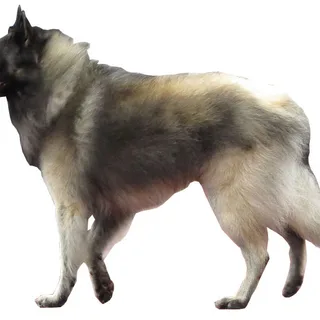
The Laekenois is a medium-lined dog, harmonious and powerful without heaviness, whose body can fit into a square. Its back is straight, short and muscular, its withers pronounced and its croup slightly sloping. Its long, lean head carried high has a moderate stop, brownish slightly almond-shaped eyes and small erect triangular ears. Its tail reaches the hock and curves slightly at rest. Its coat is harsh, dry and tousled, with a protective undercoat, fawn with charcoal markings on the muzzle and on the tail.
Temperament
Temperament and personality
Intelligent, extremely loyal and courageous, the Belgian Laekenois Shepherd has a strong instinct for protection and defense. Always alert, lively and rarely fearful, he likes to work and excels in herding, property protection and service missions. Affectionate with his family and playful with children, he can nevertheless be exuberant. His reserve towards strangers and his sometimes selective compatibility with other animals make early socialization essential.
Living together
Living with children and animals
Active by nature, the Laekenois needs frequent and long outings as well as varied physical and mental activities. He willingly accompanies his owner in sport, work or obedience exercises. He knows how to settle down when his needs are met, but does not tolerate a life that is too sedentary. Outdoor living suits him if temperatures are not extreme; apartment living remains possible provided he is offered enough daily exercise.
Training
Training and socialization
Its exceptional intelligence makes learning easier, but its strong-willed temperament and great sensitivity require consistent training, firm without brutality and based on positive reinforcement. Limits must be set early and maintained consistently. Socialization carried out from the youngest age with children, other dogs, other animals and varied environments promotes a well-balanced adult and helps to channel its protective instinct.
Budget
Belgian Shepherd Dog (Laekenois) price & budget
The purchase price varies depending on the rarity of the variety, the quality of the selection, the parents' health tests, the pedigree and the puppy's intended purpose. The budget must also include the feeding of an active dog, preventive care, training and equipment.
View cost breakdownHealth
Health at a glance
Rustic and generally robust, the Belgian Shepherd Laekenois benefits from a double coat that effectively protects it from bad weather. It does not have a long list of diseases specific to the variety, but its size and activity justify regular orthopedic, digestive and preventive vigilance.
Prevention & watch pointsDiet
Feed it well
The Belgian Shepherd Laekenois needs a complete, digestible diet adapted to its energy expenditure. Protein quality, an adjusted energy intake and a good mineral balance are particularly important during growth and then throughout its active life.
Our feeding adviceDid you know?
Anecdotes and popularity
The Laekenois is the rarest variety of the Belgian Shepherd family, alongside the Malinois, the Groenendael and the Tervueren. It stands out above all for its hard, rough coat. Its name recalls the royal castle of Laeken and its historical link with Queen Marie-Henriette. Despite its rarity, it retains all the working abilities associated with Belgian Shepherds.