Origins
Where does it come from?
The Belgian Shepherd Groenendael owes its name to the Belgian village of Groenendael. The variety was developed from 1879 by Nicolas Rose, who mated a black long-haired bitch with a herding dog of the same appearance. Their offspring served as the basis for the selection of this variety of the Belgian Shepherd. Like the Malinois, the Tervueren and the Laekenois, the Groenendael belongs to the Belgian Shepherd breed, recognized by the Fédération Cynologique Internationale in 1956. It was selected for herding, then distinguished itself in guarding, defense, search and many working disciplines.
Appearance
What does it look like?
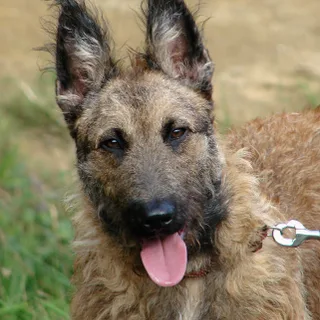
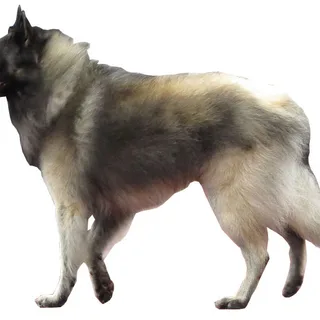
The Belgian Shepherd Groenendael is a medium-lined dog, harmonious, robust and elegant, endowed with a dry and well-developed musculature. Its body fits into a square, with a straight and firm back, a marked withers, a solid loin and a muscular croup. Its long and well-shaped head bears small erect triangular ears and dark brown almond-shaped eyes with a lively and gentle expression. Its tail, of medium length and thick at the base, hangs at rest and rises when the dog is alert. Its coat, long, smooth, dense and close, combined with a woolly undercoat, is exclusively jet black.
Temperament
Temperament and personality
Very intelligent, vigilant and courageous, the Groenendael has great vitality and a strong protective instinct. Hard-working and always ready to act, he is reliable, determined and attentive to his surroundings. Affectionate and very attached to his owner, he enjoys family life and can be playful, while remaining naturally gifted for guarding and defense. His sensitivity calls for a relationship based on trust rather than constraint.
Living together
Living with children and animals
On a daily basis, the Groenendael seeks closeness to its owner and does not cope well with prolonged solitude. It needs sustained physical and mental activity, with long walks, games, tracking, obedience or agility. It prefers wide open spaces and an active life, but can adapt to an apartment if its needs are truly met every day. Early socialization makes relationships with other dogs, other animals and visitors easier.
Training
Training and socialization
Frank, intelligent and receptive, the Groenendael learns quickly when sessions are varied, consistent and motivating. Its training must combine gentleness, firmness, rigor, play and rewards, without brutality. Exercises that are too repetitive may bore it; it is better to engage its sense of smell, its work drive and its ability to solve problems. Socialization must begin early in order to channel its protective instinct and prevent dominant behavior toward its fellow dogs.
Budget
Belgian Shepherd Dog (Groenendael) price & budget
The price of a puppy varies depending on the reputation of the kennel, the quality of the selection, the parents' health tests, the pedigree and the dog's intended purpose. The purchase budget must be supplemented by expenses for food, veterinary preventive care, training, insurance and equipment.
View cost breakdownHealth
Health at a glance
The Groenendael is generally robust and its double coat protects it effectively against bad weather. Like other shepherd dogs of this size, it nevertheless requires regular orthopedic, ear and digestive monitoring. Serious selection, controlled growth and preventive veterinary follow-up help to preserve its health.
Prevention & watch pointsDiet
Feed it well
This large athletic dog needs a complete, digestible diet that is sufficiently rich in quality proteins to maintain its muscle mass and cover its energy expenditure. The ration must be adapted to age, weight, activity, body condition and any veterinary recommendations.
Our feeding adviceDid you know?
Anecdotes and popularity
The Groenendael is one of the four varieties of the Belgian Shepherd, alongside the Malinois, the Tervueren and the Laekenois. It stands out immediately by its long coat exclusively solid black. Its intelligence, its excellent sense of smell and its aptitude for work allow it to succeed as well as a herding and guard dog as in search, obedience and canine sports.