A menu for every age
Needs change over time
Kitten : Choose a complete growth food, rich in proteins and given in several small meals.
Adult : Adjust the ration to actual activity and maintain a stable weight with a balanced diet.
Senior : Favor a more digestible food and closely monitor hydration, weight and appetite.
Which food?
Kibble, wet food, or home-cooked diet?
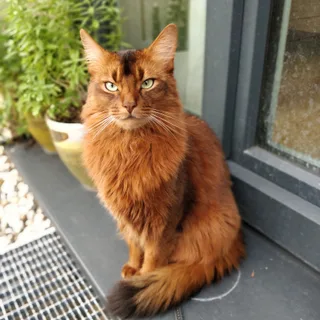
Premium kibble, possibly combined with a portion of good-quality wet food, is generally well suited to the York Chocolat. The formulation should be rich in digestible animal proteins and adapted to the cat’s life stage, without unnecessary excess calories.
Amounts
How much should you give?
The daily amount must be adjusted according to weight, actual activity, age and the energy density of the chosen food. Ideally, base it on the manufacturer's recommendations and then refine according to the body condition observed with the veterinarian.
| Weight | Daily amount | Meals/day |
|---|---|---|
| 4 - 5 kg | 66 - 94 g | 2 |
| 5 - 7 kg | 82 - 116 g | 2 |
| 7 - 8 kg | 98 - 137 g | 2 |
Change
Managing the food transition
Any dietary transition must be gradual over several days in order to limit digestive upsets and encourage acceptance of the new food. A change that is too abrupt can cause loose stools, decreased appetite, or refusal of the ration.
Hydration
Water: do not overlook it
Even when it eats kibble, the York Chocolat must always have access to clean, fresh water. A fountain, several water points in the home and the addition of wet food can promote good daily hydration.
Little extras
Treats, in moderation
Treats must remain occasional and included in the calculation of the total ration. They are useful for enriching the relationship and rewarding certain behaviors, but excess promotes weight gain.
Good habits
For a top-notch bowl
- Weigh the ration to avoid daily excesses.
- Distribute the food according to the cat's habits and the energy density of the food.
- Leave fresh water available at all times.
Never give
Chocolate, onion, garlic, grapes, alcohol, caffeine, cooked bones and many very fatty or salty foods are dangerous for the cat. They can cause digestive, neurological, kidney or cardiac disorders that are sometimes serious.