Origins
Where does it come from?
The Siberian has been part of Russia’s feline heritage for centuries and appears in the country’s folklore. Its exact origins remain debated, but the breed is associated with hardy cats capable of hunting rodents and withstanding harsh climates. Mentioned as early as 1889 by Harrison W. Weir, it spread more widely in Western Europe from the end of the 20th century before being recognized by the main international feline organizations.
Appearance
What does it look like?
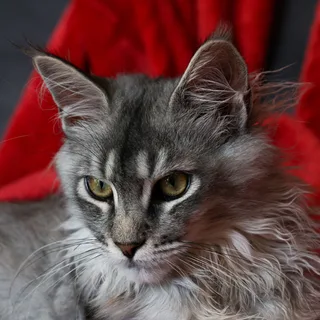
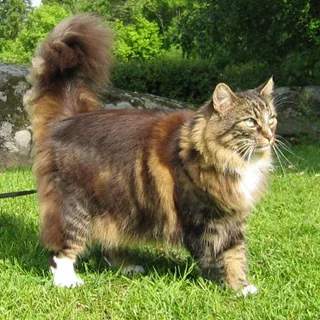
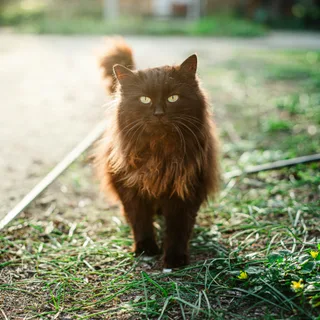
The Siberian is a medium to large cat, powerful, muscular and well built, with a solid bone structure. Its rather short and broad head with rounded contours, its large and open eyes, its well-furnished ears and its thick tail reinforce its rustic appearance. Its semi-long to long coat, very dense, composed of guard hair, topcoat hair and undercoat, readily forms a ruff and effectively protects against cold and humidity.
Temperament
Temperament and personality
The Siberian is an affectionate, well-balanced and sociable cat, appreciated for its tenderness and calm. It readily seeks the company of its family without being constantly intrusive. Intelligent, curious and quite adaptable, it generally gets along well with children and other animals when introductions are done properly.
Living together
Living with children and animals
Calm in its general expression, the Siberian nevertheless remains active and athletic. It likes to climb, observe and keep a part of hunting instinct, which makes games, hiding places and a cat tree useful. It can live in an apartment as well as in a house, provided it benefits from regular interactions and an enriched environment.
Training
Training and socialization
The Siberian responds well to a gentle, consistent and regular education. Routines, positive reinforcement and play sessions are the best levers to channel its energy and encourage good behavior. As with all cats, early socialization, getting used to brushing and learning to be transported greatly facilitate daily life.
Budget
Siberian price & budget
The price of the Siberian varies mainly depending on the lineage, the reputation of the cattery, compliance with the standard, whether intended as a pet or for breeding, and the quality of health monitoring. A consistent price should come with identification, proper documents, and serious socialization of the kitten.
View cost breakdownHealth
Health at a glance
The Siberian is renowned for its robust health and good overall hardiness. Well cared for, properly fed and monitored by a veterinarian, it often ages in good conditions. Its dense coat and its build mainly require regular vigilance regarding grooming, weight and screening for cardiac conditions known in the breed.
Prevention & watch pointsDiet
Feed it well
The Siberian needs a complete, balanced and easy-to-digest diet, rich in good-quality animal proteins. Its needs must be adjusted to its age, its activity level, its neutering and its indoor or outdoor lifestyle.
Our feeding adviceDid you know?
Anecdotes and popularity
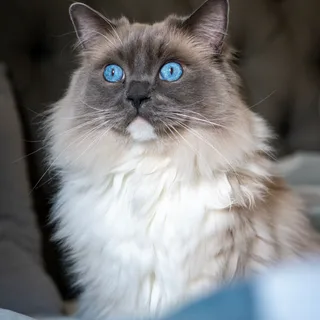
The Siberian is often presented as one of the great emblematic cats of Russia. Its colourpoint variety is known as the Neva Masquerade. The breed is also regularly cited among those that some people sensitive to allergens tolerate better, even though no cat breed is completely allergen-free.