Origins
Where does it come from?
The Mandarin corresponds to the Javanese in many feline nomenclatures. From the same family as the Balinese and the Oriental, it was developed in the United States from Siamese-type cats with a non-colourpoint coat and semi-long hair. The breed was gradually recognized by the major feline organizations in the second half of the 20th century.
Appearance
What does it look like?
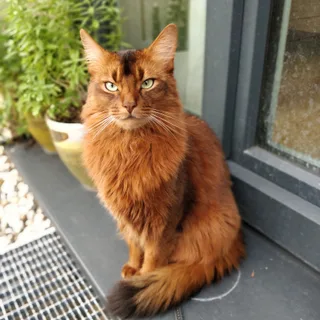
The Mandarin is a medium-sized cat with a long, slender, muscular and very supple body. Its head is triangular, its nose is straight, its ears are large and well open, and its almond-shaped eyes are most often green. Its semi-long coat, silky and lying close to the body, has no significant undercoat, with a well-furnished plume-like tail.
Temperament
Temperament and personality
Very demonstrative, the Mandarin seeks a close relationship with its household and does not tolerate being ignored well. It is an intelligent, expressive and often talkative cat, which likes to take part in the life of the home and capture the attention of those close to it.
Living together
Living with children and animals
Active and playful, the Mandarin readily climbs, explores its environment and needs daily stimulation. It often follows its human from room to room, enjoys regular interactions and can be stubborn or exclusive if its social and physical needs are not sufficiently met.
Training
Training and socialization
The Mandarin learns well when one relies on consistency, play and positive reinforcement. It benefits from an environment rich in perches, scratching posts and interactive sessions, as well as stable routines that channel its energy and its strong need for contact.
Budget
Mandarin price & budget
The Mandarin is a relatively rare breed, which can influence its availability depending on bloodlines and breeders. The price mainly depends on origin, selection work, and the health guarantees provided.
View cost breakdownHealth
Health at a glance
The Mandarin is generally a robust cat, but its monitoring must remain attentive, notably for the eyes, the heart and maintaining a stable weight. Like many Oriental cats, it benefits from rigorous breeding and regular veterinary follow-up.
Prevention & watch pointsDiet
Feed it well
The Mandarin needs a complete and digestible diet, adapted to its age, its activity and its body condition. The quality of the ration matters more than volume alone.
Our feeding adviceDid you know?
Anecdotes and popularity
The name Mandarin is often used as a synonym for Javanese or Oriental Longhair depending on the countries and the federations. It is distinguished in particular from the shorthaired Oriental by its semi-long coat and from the Balinese by the absence of the colourpoint pattern.