Origins
Where does it come from?
The Maine Coon originates from the north-east of the United States, more precisely from the State of Maine from which it takes its name. Its ancestors are said to have been long-haired cats that arrived with the first European settlers, then naturally selected for their resistance to cold. Highly appreciated on farms for its hunting qualities, it was then presented in cat shows as early as the 19th century. After a period of decline in the face of other long-haired breeds, it regained strong popularity from the middle of the 20th century and today ranks among the most appreciated cat breeds in France.
Appearance
What does it look like?
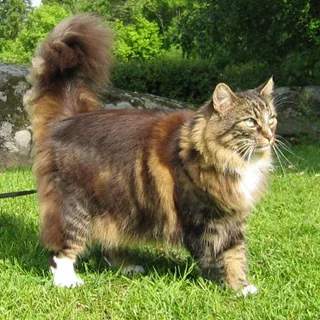
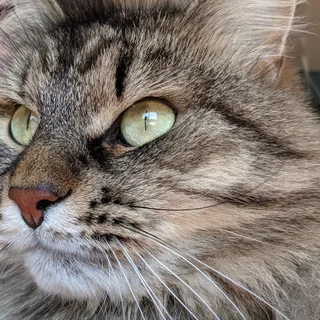
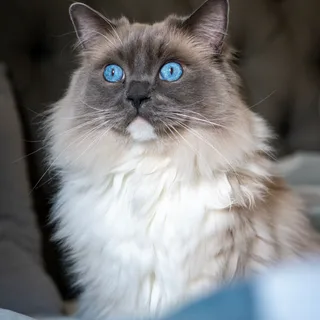
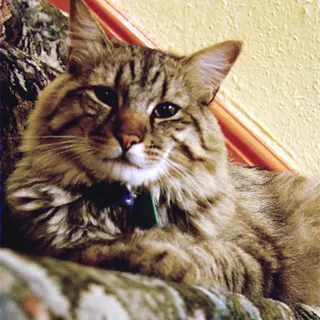
The Maine Coon is one of the largest domestic cats. Its long and powerful body fits into a rectangle, with a broad chest, solid musculature and substantial bone structure. Its head has a square muzzle, large high-set ears often ending in tufts, as well as large expressive eyes. Its medium-long to long coat forms a ruff, with a long and very bushy tail.
Temperament
Temperament and personality
The Maine Coon is a calm, patient and very sociable cat. Attached to its family, it readily seeks closeness without being constantly intrusive. It is generally gentle with children, tolerant with other animals and rarely aggressive. Its balanced temperament often earns it the reputation of a gentle giant.
Living together
Living with children and animals
Easy to live with, the Maine Coon can adapt just as well to apartment living as to a house, provided it has space, interactions and enrichment. It remains moderately active, likes to play and explore, and often retains curious behavior well into adult life. It is also known for vocalizing in a variety of ways and for showing an unusual interest in water for a cat.
Training
Training and socialization
The Maine Coon responds well to gentle, consistent and positive training. He learns all the better when habits are established early, notably for brushing, handling, the carrier and routine care. Regular play sessions, scratching posts suited to his large size and good socialization promote a stable adult cat that is pleasant to live with.
Budget
Maine Coon price & budget
The price of a Maine Coon varies greatly depending on the kitten’s origin, the quality of the selection, the health tests carried out on the parents and compliance with the standard. Cats from reputable catteries, well socialized and properly monitored are logically the most expensive.
View cost breakdownHealth
Health at a glance
Behind its robust appearance, the Maine Coon has several hereditary predispositions that justify serious selection of breeding cats and attentive veterinary monitoring. Good lifestyle hygiene, controlled weight and regular check-ups help preserve its quality of life over the long term.
Prevention & watch pointsDiet
Feed it well
The Maine Coon’s growth is slow and can continue until 4 or 5 years, which requires a diet adapted to this particular development. In adulthood, its needs remain high in quality animal proteins, with constant attention paid to hydration and weight control.
Our feeding adviceDid you know?
Anecdotes and popularity
The Maine Coon is often cited among the largest cats in the world and several individuals of the breed have held length records. Its impressive silhouette contrasts with a generally gentle and placid temperament, which explains its frequent nickname of gentle giant. In France, it has for several years ranked among the most popular feline breeds.