Origins
Where does it come from?
The precise origins of the Swedish Lapphund remain difficult to establish, but it seems to be among the oldest European Spitz-type breeds. It once accompanied nomadic Lapp, or Sami, reindeer herders, who appreciated its versatility for herding and guarding the herds as well as for hunting, but also its resistance to the harsh conditions of Lapland. This region now extends over territories of Sweden, Finland, Norway and Russia. The Fédération Cynologique Internationale definitively recognized the breed on 19 January 1955 under number 135. Its current official FCI standard was published in November 2011.
Appearance
What does it look like?
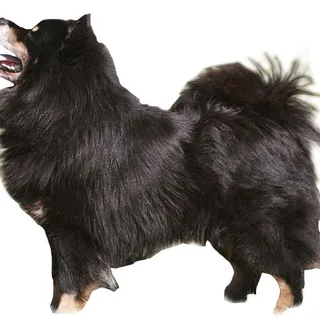
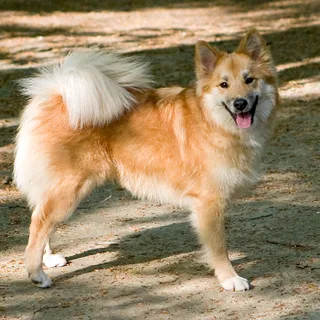
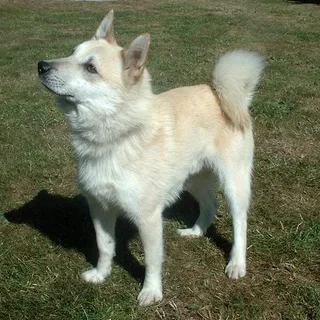
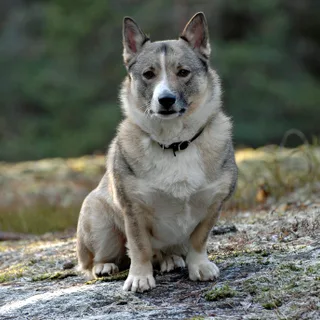
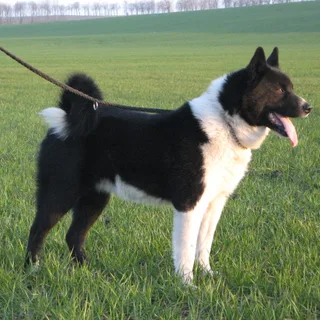
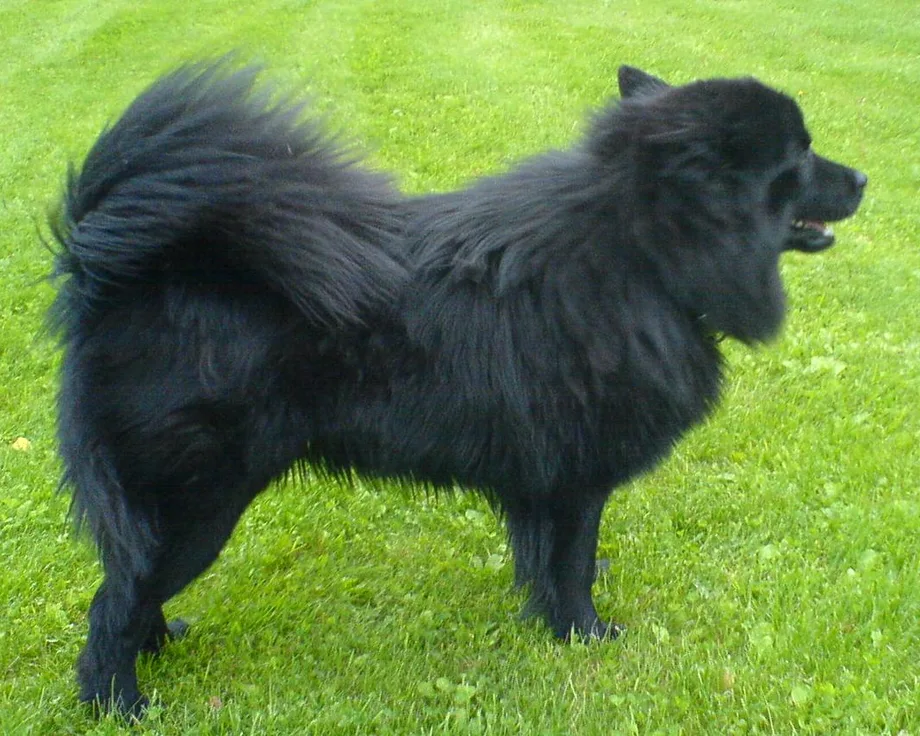
Slightly smaller than average, this Spitz-type dog has a solid bone structure, a robust silhouette inscribed in a rectangle and light, free-flowing movement. The head, carried with confidence, is slightly longer than it is wide, with a rounded forehead and a very pronounced stop. The small triangular ears are erect, mobile and slightly rounded at their tip. The eyes, round, expressive and well spaced, range from brown to dark brown. The loin is short and broad, the croup muscular and slightly sloping, the chest high and developed, and the belly slightly tucked up. The tail, set rather high, reaches the point of the hock and curls over the back when the dog is active. The long, abundant coat stands straight over a dense, slightly curly undercoat. Shorter on the head and the front of the limbs, it forms a ruff and becomes fuller at the sternum, at the back of the legs and on the tail. The coat is solid black, ideally shaded with a bronze tone tending towards brown.
Temperament
Temperament and personality
Lively, receptive, attentive and versatile, the Swedish Lapphund shows an almost constant desire to work. Intelligent, hardy and enduring, it excels in herding, notably reindeer, tracking and other utility activities. Very affectionate and inclined to please its owner, it is more wary of strangers without being a first-rate defender. Its hunting instinct is present, while its temperament remains not very independent and very sociable with children as well as with other animals.
Living together
Living with children and other pets
This dynamic dog needs to exercise regularly and enjoys long walks, jogging, hiking and swimming with its owner. It also shows talent in agility, obedience and herding trials. Playful and energetic, it prefers wide open spaces and the fresh air to urban apartment living. In the city, a large fenced garden provides a more suitable setting, even if it likes to join its family indoors whenever it has the opportunity.
Training
Training and socialization
The Swedish Lapphund is not particularly difficult to train. Its training must nevertheless start early, remain firm and consistent, and be accompanied by good socialization. Its intelligence, receptiveness and desire to please encourage obedience and shared work.
Budget
Price and budget for the Swedish Lapphund
The acquisition budget depends in particular on the breeder and the dog's profile, within the price range observed for this breed.
See cost breakdownHealth
Health at a glance
The Swedish Lapphund is generally robust and resilient. Its dense double coat provides effective protection against cold and bad weather. No known predisposition to any particular disease is reported in this rustic and ancient breed.
Prevention and things to watch forNutrition
Feeding your pet well
The Swedish Lapphund needs a complete, digestible diet adapted to its age, its activity and its body condition. An adult generally weighs from 15 to 20 kg. The quality of the ration and weight control protect digestion and joints.
Our feeding adviceDid you know?
Fun facts and popularity
The Swedish Lapphund is also known under the names Swedish Lapphund and Svensk Lapphund. Classified in FCI group 5, it bears standard number 135 and has enjoyed definitive recognition since 1955. Reported litters generally number from 2 to 9 puppies.