Origins
Where does it come from?
The Snowshoe is an American breed born in Philadelphia in the 1960s. Dorothy Hinds-Daugherty sought to obtain a cat combining the Siamese type with clearly visible white markings, by crossing Siamese cats with bicolored American Shorthair-type cats, then with the contribution of the Birman. The breed owes its name to its characteristic white feet, reminiscent of snowshoes. It was recognized by TICA in the 1980s and remains today relatively rare, notably in France.
Appearance
What does it look like?
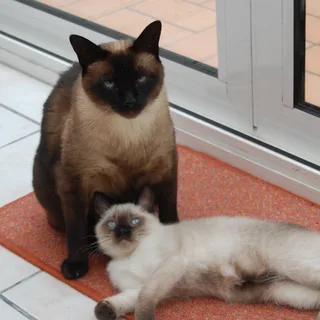
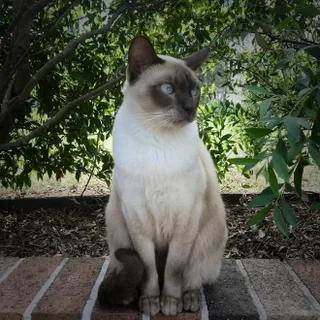
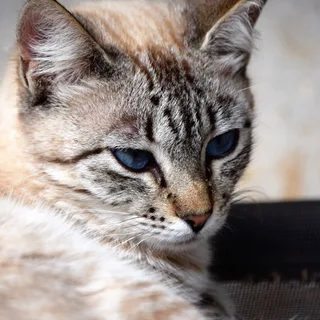
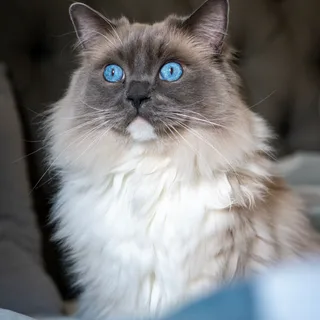
The Snowshoe is a semi-foreign type cat, harmonious, muscular and denser than it looks. Its head forms a softened triangle with rounded contours, with fairly large blue eyes that are slightly slanted. The ears are medium-sized, wide at the base. The coat is short to semi-short, soft, silky and dense. The desired markings combine darker points with well-placed white areas, particularly on the feet, the chest and depending on the pattern on the face.
Temperament
Temperament and personality
The Snowshoe is a gentle, affectionate cat and very attached to those close to it. It enjoys petting, human presence and family life. Calmer than the Siamese on average, it retains a playful and sociable temperament, with moderate vocalization. It does not tolerate prolonged solitude well and readily seeks interaction.
Living together
Living with children and animals
The Snowshoe adapts well to different lifestyles provided it has comfort, attention and a few arrangements at height. It likes to climb, observe and play, but without excessive agitation. Many individuals also show a marked curiosity for water. Indoors, a cat tree, hiding places and regular play times help it stay balanced.
Training
Training and socialization
The Snowshoe responds well to a stable, gentle and consistent relationship. Its intelligence and attachment to humans make it easier to learn routines, transport, the scratching post and common handling, especially with positive reinforcement. Early socialization, interactive games and a daily presence help it express its best temperament.
Budget
Snowshoe price & budget
The price of a Snowshoe varies mainly depending on the quality of the lineage, compliance with the standard, the reputation of the cattery and the rarity of the breed. In France, this rarity can limit the supply and influence the acquisition budget.
View cost breakdownHealth
Health at a glance
The Snowshoe is generally considered a robust cat. No specific hereditary disease is clearly identified as characteristic of the breed, but routine veterinary follow-up remains essential for vaccination, parasite prevention and monitoring of weight, the mouth and overall condition.
Prevention & watch pointsDiet
Feed it well
The Snowshoe needs a diet rich in animal proteins, digestible and adapted to its physiological status. The quality of the ration matters more than the volume, and the goal is to meet its needs without promoting overweight.
Our feeding adviceDid you know?
Anecdotes and popularity
The name Snowshoe means snowshoe in English and directly refers to its white feet. The breed is still not very widespread, which explains its relative rarity among breeders. Its appearance is reminiscent of the Siamese, but its temperament is often described as a little more calm and very family-oriented.