Origins
Where does it come from?
The Pyrenean Mastiff originates from Spain, where it long accompanied herds in mountainous areas. A close functional relative of the French Pyrenean Mountain Dog, it descends from ancient molossers and shepherd dogs selected to defend animals against wolves, bears and thieves. The breed declined sharply during and after the Second World War, before being revived by Spanish breeders. It has been definitively recognized by the FCI since 1954 and its Spanish club was founded in 1977.
Appearance
What does it look like?
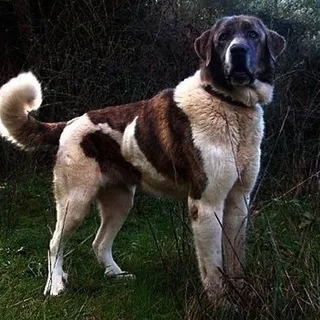
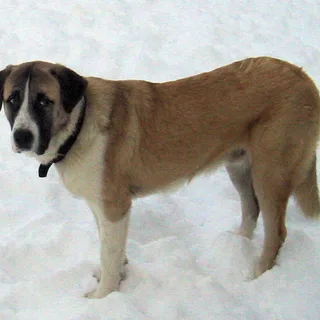
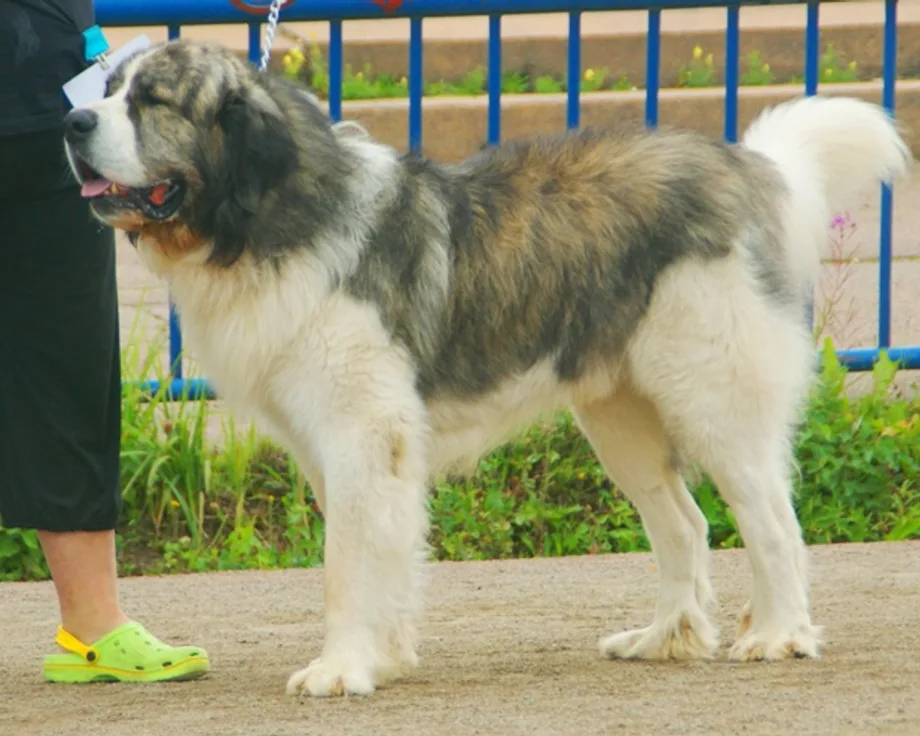
The Pyrenean Mastiff is a giant dog with a strong, harmonious and very bony build. Its body fits into a rectangle, with developed musculature, a broad chest and a solid back. The head is massive and robust, the skull as wide as it is long, the ears drooping and triangular, and the almond-shaped eyes express vigilance. Its coat is long without being excessive, dense, thick and harsh, most often white with a well-defined mask and sometimes matching colored markings.
Temperament
Temperament and personality
Awake, attentive and very courageous, the Pyrenean Mastiff is above all a protector. Its natural distrust of strangers, its composure and its determination make it an excellent guard dog. With its family, it is affectionate, calm and stable. It can live together properly with its fellow dogs when it is well socialized.
Living together
Living with children and other pets
On a daily basis, the Pyrenean Mastiff stands out for a calm temperament and moderate activity. He appreciates space, the outdoors and a quiet routine rather than a very sporty life. He naturally watches his surroundings and often remains reserved with strangers. A regular daily walk suits him, without sustained efforts that would unnecessarily strain his joints.
Training
Training and socialization
His training must start early and remain consistent, calm and coherent. The Pyrenean Mastiff learns properly when he understands the framework and when the demands are fair. Positive methods, rewards and encouragement yield better results than any brutality, which would be counterproductive. It is important to correct undesirable behaviors quickly, because his power in adulthood can make him difficult to handle if the foundations have not been laid.
Budget
Price and budget for the Pyrenean Mastiff
The purchase price of the Pyrenean Mastiff varies depending on the quality of the lineage, the reputation of the breeder, the tests carried out on the breeding dogs and the availability of the breed. Its large size also implies a maintenance budget to anticipate from the outset.
See cost breakdownHealth
Health at a glance
The Pyrenean Mastiff is overall a robust and resilient dog. Like many giant breeds, its large size nevertheless requires particular vigilance regarding the musculoskeletal system and the digestive system. Regular veterinary monitoring, well-managed growth, and careful weight management are essential to preserve its comfort and mobility.
Prevention and things to watch forNutrition
Feeding your pet well
His diet must be balanced, digestible and suited to a giant dog. The Pyrenean Mastiff needs generous but controlled portions, in order to support his body mass without promoting overweight. Regular meals and the quality of the ingredients are decisive.
Our feeding adviceDid you know?
Fun facts and popularity
The Pyrenean Mastiff is sometimes called Mastín del Pirineo, Mâtin de Navarre, Mâtin de León or Pyrenean Mastiff. Its history as a guardian of herds against large predators explains its courage, power and reserve toward strangers. Despite its impressive size, it is above all appreciated for its calm at home.