Origins
Where does it come from?
Ancient breed originating from Germany, the Pinscher has been documented since the end of the 19th century. It shares common ancestors with the Schnauzer and became distinguished from it by its short coat, whereas the Schnauzer was once considered a wire-haired Pinscher. Selections gradually established the modern type, notably the black and tan or red coats. The Fédération Cynologique Internationale definitively recognized the breed on 14 July 1955.
Appearance
What does it look like?
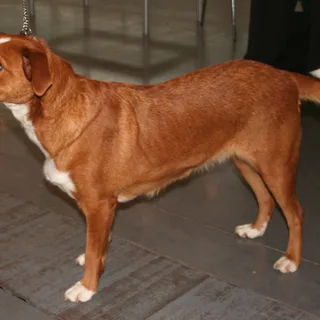
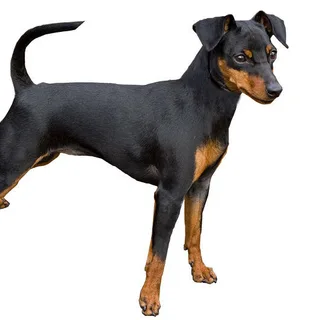
The Pinscher is a medium-sized dog, harmoniously built, muscular and set in an almost square format. Its head is elongated with a slight stop, its eyes are oval and dark, and its V-shaped ears are folded forward. The coat is short, shiny, lying close and without undercoat. The coat color can be deer red to dark red-brown, or black with well-defined tan markings.
Temperament
Temperament and personality
The Pinscher is an intelligent, lively, self-confident and well-balanced dog. He is affectionate with his own without being intrusive, keeps a certain reserve towards strangers and has a strong protective instinct. Well socialized, he cohabits properly with other animals and can be gentle with children.
Living together
Living with children and other pets
On a daily basis, the Pinscher is bursting with energy and likes to take part in family life. He alerts when it is useful without barking excessively, enjoys varied activities and copes poorly with boredom. His liveliness and assertive temperament require a consistent framework and regular physical exercise.
Training
Training and socialization
The Pinscher shows good aptitudes for training thanks to its intelligence and its liveliness, but it needs a calm, consistent and sufficiently firm handler. Brutal methods should be avoided. Early socialization and regular learning promote a stable, attentive and pleasant dog to live with.
Budget
Price and budget for the Pinscher
The purchase price of the Pinscher varies mainly according to the lineage, the reputation of the breeding kennel, registration in the pedigree, the dog's age and whether it is intended for companionship or show.
See cost breakdownHealth
Health at a glance
The Pinscher is generally a robust dog, provided it benefits from an active lifestyle, regular veterinary follow-up, and sufficient protection against bad weather. Its short coat and lack of undercoat make it less comfortable in very cold weather.
Prevention and things to watch forNutrition
Feeding your pet well
The Pinscher needs a complete and digestible diet adapted to its medium size, its high activity level and its physiological condition. Protein quality and control of energy density are important to support its muscle mass without excess.
Our feeding adviceDid you know?
Fun facts and popularity
The Pinscher designation historically groups together several types, notably the German Pinscher, sometimes called the Medium Pinscher, as well as the Miniature Pinscher, whose smallest individuals are sometimes described as Toy Pinschers. Despite this diversity of sizes, they share the same lively expression, the same proud bearing, and the same underlying energetic temperament.