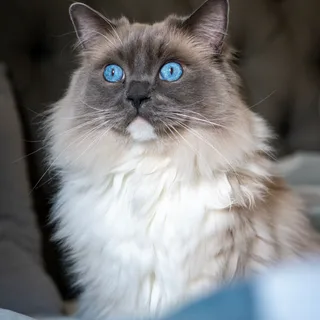
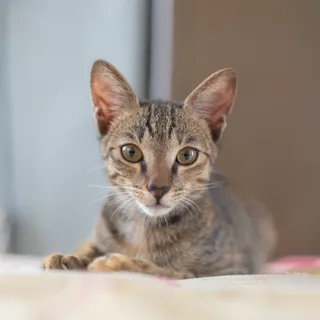
A menu for every age
Needs change over time
Kitten : A growth diet that is rich and split into several meals supports development without overloading digestion.
Adult : A controlled and complete ration helps maintain a stable weight and coat quality.
Senior : A highly digestible, palatable diet adapted to renal or dental condition often becomes preferable with age.
Which food?
Kibble, wet food, or home-cooked diet?
Kibble or premium wet food for indoor or long-haired cats generally works well, provided it supports digestion and coat maintenance. A suitable texture can also help some individuals better grasp their food depending on the shape of their muzzle. The main thing is to choose a complete, balanced, and well-tolerated food.
Amounts
How much should you give?
Quantities must be adjusted to the ideal weight, age, neutering and the cat’s actual activity. A not very active Persian can quickly end up receiving too much energy if the ration is not controlled. It is preferable to regularly assess body condition with the veterinarian.
| Weight | Daily amount | Meals/day |
|---|---|---|
| 3 - 4 kg | 45 - 60 g | 2 |
| 4 - 5 kg | 55 - 70 g | 2 |
| 5 - 6 kg | 65 - 80 g | 2 |
Change
Managing the food transition
Any dietary transition must be done gradually over several days in order to limit digestive upsets and food refusal. Gradually mixing the old and the new food allows better adaptation. In case of digestive sensitivity, the change must be slowed down even more.
Hydration
Water: do not overlook it
Good hydration is important for all cats and deserves special attention in those that eat mostly kibble. Clean, fresh water must remain available at all times, ideally in several places in the home. Many cats drink better with a fountain.
Little extras
Treats, in moderation
Treats must remain occasional and be included in the total daily ration. They can be used to reward brushing, eye care, or calm handling. Regular excess quickly promotes weight gain in this low-energy-spending breed.
Good habits
For a top-notch bowl
- Brushing often limits the ingestion of hair during grooming.
- Weighing the ration helps avoid weight gain.
- Offering wet food often promotes hydration.
Never give
Chocolate, onion, garlic, grapes, alcohol, caffeine, cooked bones and many table scraps can be toxic or dangerous for the cat. Certain sweeteners such as xylitol and certain human medications also pose a serious risk. In case of suspected ingestion, you must quickly contact a veterinarian.