Longevity
Life expectancy
With good living conditions, suitable activity and regular veterinary follow-up, this breed generally lives between 10 and 14 years. Its longevity depends largely on the quality of its care, its diet and its level of exercise.
Constitution
Is this a robust breed?
Its constitution is generally solid for a pointing dog of this size. It can handle sustained activity, but requires a stable lifestyle and a present human environment to maintain its good physical and behavioral balance.
Things to watch for
What to look out for
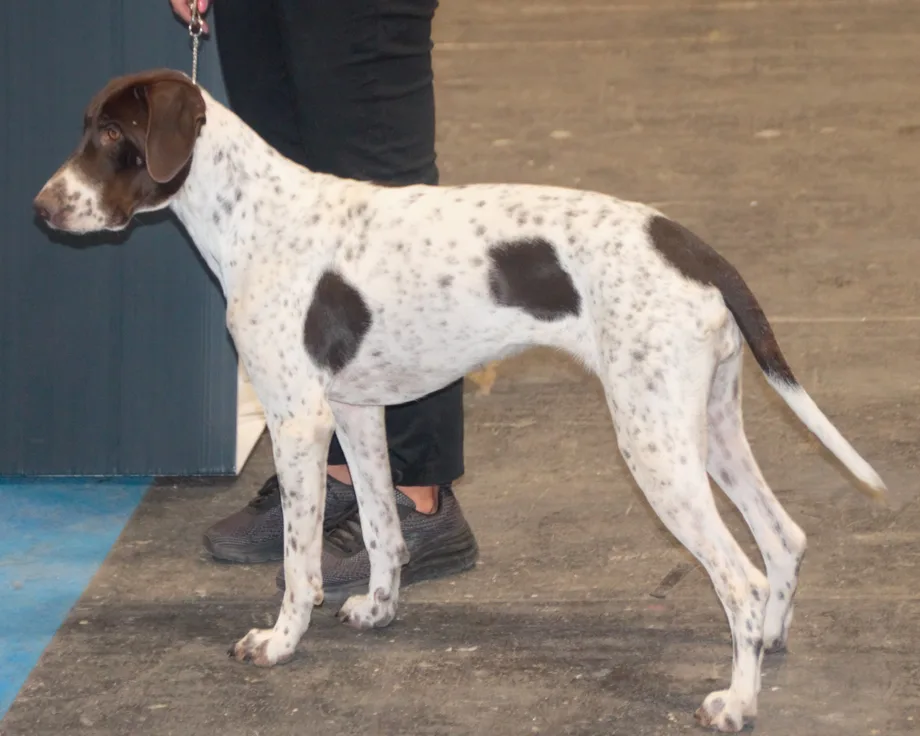
Particular vigilance must be paid to the drooping ears, which can retain moisture and debris after outings. Long periods of isolation must also be avoided, as this dog does not tolerate prolonged solitude well.
Hip dysplasia: Like many dogs, the Old Danish Pointer may have a joint malformation that promotes pain and osteoarthritis, especially if overweight.
Eye conditions: An ophthalmological examination of breeding dogs and monitoring for tearing or vision issues remain useful.
Ear infections and skin allergies: Itching, redness, or dirty ears should be checked, especially if the dog works in dense cover.
Climate
Tolerance to cold and heat
The Old Danish Pointer shows an average tolerance to both cold and heat. In hot weather, it is advisable to avoid intense exertion during the hottest hours and to always leave it fresh water. In cold or damp weather, returning to a dry place after exertion remains preferable.
Weight
Prone to weight gain
This active dog must maintain an athletic, well-defined silhouette. A rationing adjusted to its level of exercise, combined with regular outings, helps prevent weight gain that would harm its performance and its joint comfort.
Everyday care
Good habits to keep your pet healthy
- Inspect the ears after outings to remove debris and moisture
- Check paw pads and skin after walks in natural terrain
- Maintain sustained daily activity to preserve its balance
Vaccination
Old Danish Pointer vaccinations: schedule
Which vaccines does a Old Danish Pointer need? Like all dogs, Old Danish Pointers should receive their core vaccines from 8 weeks of age: CHPPi (core vaccine) and Leptospirosis. Puppies receive their initial Old Danish Pointer vaccinations in several shots spaced 4 weeks apart, followed by a first booster at 1 year. Depending on their lifestyle (hunting, hiking, boarding, travel, region), your veterinarian may add vaccines against Rabies, Kennel cough, Piroplasmosis, Lyme disease and Leishmaniasis.
| Vaccine | Primary vaccination | First booster | Then | For whom? |
|---|---|---|---|---|
CHPPi (core vaccine)Core Distemper, Rubarth hepatitis, parvovirosis and parainfluenza | 8 weeks · 12 weeks · 3 months | 1 year | every year | All animals |
LeptospirosisCore Leptospirosis (bacterium transmitted by rodent urine and stagnant water) | 8 weeks · 12 weeks | 1 year | every year | All animals |
RabiesDepending on lifestyle Rabies | 12 weeks | 1 year | every year | Mandatory for travel abroad, categorized dogs, most boarding kennels and shows |
Kennel coughDepending on lifestyle Bordetella bronchiseptica and parainfluenza | 8 weeks | 1 year | every year | Dogs attending boarding kennels, daycares, dog clubs and shows |
PiroplasmosisDepending on lifestyle Tick-borne babesiosis | 5 months · 6 months | 1 year | every year | Hunting dogs, dogs living in rural or wooded areas, dogs highly exposed to ticks |
Lyme diseaseDepending on lifestyle Tick-borne borreliosis | 12 weeks · 3 months | 1 year | every year | Hiking dogs, hunting dogs, forest areas of the East and the Center |
LeishmaniasisDepending on lifestyle Leishmaniasis transmitted by sandflies | 6 months | 1 year and 6 months | every year | Dogs living or staying in the South of France, Corsica and the Mediterranean basin |
Adult Old Danish Pointer booster shots are given annually for leptospirosis and rabies. For distemper, hepatitis, and parvovirus, a booster every three years is often enough after the first booster. Your veterinarian will tailor the schedule to your dog's actual risk.
Which boosters does your Old Danish Pointer need?
Enter your companion's age to see which vaccines are due now and when the next boosters are needed.
Choosing well
Adopting a healthy Old Danish Pointer
A standard veterinary follow-up, with a regular general check-up and particular attention to the ears and locomotor condition, is recommended. As with any working or hunting dog, examination after outings helps to quickly spot injuries, grass awns or irritations.
This information is for guidance only and doesn't replace advice from a veterinarian. If you have any concerns about your pet's health, consult a professional.