Origins
Where does it come from?
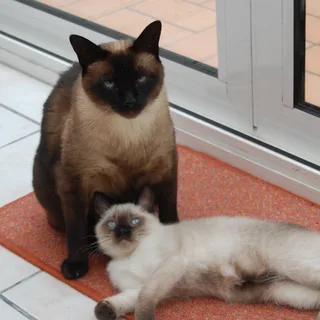
The Thai corresponds to the old type of the Siamese, remaining faithful to a rounder and stockier silhouette than that of the modern Siamese. Originating from Thailand, it arrived in the United Kingdom at the end of the 19th century and was presented in shows as early as 1871. After the selections that led to the evolution of the contemporary Siamese, the Thai was preserved as the traditional version of this line.
Appearance
What does it look like?
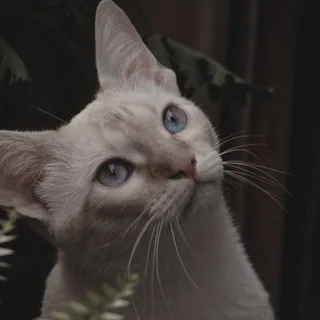
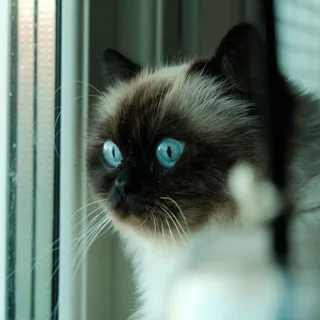
The Thaï is a medium-sized cat with a semi-foreign body, muscular without heaviness, with a well-developed chest. Its head with softened contours forms a harmonious triangle, its ears are medium and broad at the base, and its oval eyes of an intense blue are very characteristic. Its short, fine and silky coat lies close to the body, and only colourpoint coats are accepted by the standard.
Temperament
Temperament and personality
Very attached to its human, the Thai is affectionate, loyal, playful and particularly demonstrative. It readily seeks contact, tolerates indifference poorly and likes to take part in household life. It is also an intelligent and sensitive cat, known for its great vocal expressiveness.
Living together
Living with children and animals
The Thai can live in an apartment as well as in a house with secure access to a balcony or a garden, provided it receives attention and stimulation. It likes to climb, observe, play with children and share its family's daily life. Its main behavioral trait remains its tendency to vocalize a lot and to follow its owner everywhere.
Training
Training and socialization
The Thai responds well to a gentle, consistent and early education, based on positive interactions. Its intelligence and its attachment to the home make it easier to learn routines, handling and sometimes even walking on a leash. On the other hand, it tolerates brutality or long periods of solitude poorly.
Budget
Thai price & budget
The purchase price of a Thaï varies mainly according to the lineage, conformity to the standard, the reputation of the cattery and the quality of health monitoring and socialization of the kitten.
View cost breakdownHealth
Health at a glance
The Thaï is generally a sturdy cat, but its monitoring must remain serious as for any purebred cat. Good hydration, basic vaccinations and regular veterinary check-ups help preserve its health over the long term.
Prevention & watch pointsDiet
Feed it well
The Thai needs a complete, digestible and good-quality diet, adapted to its age, its activity level and its physiological status. Regular meals and permanent access to water are essential.
Our feeding adviceDid you know?
Anecdotes and popularity
The Thai is often presented as the traditional Siamese. It retains the more rounded look of the old Siamese while keeping the famous colourpoint coat, blue eyes and the very talkative temperament that have made this family of cats famous throughout the world.