Origins
Where does it come from?
The Labradoodle comes from the cross between the Labrador Retriever and the Poodle. The breed was developed in Australia with the idea of obtaining a guide dog combining the stable temperament of the Labrador and a coat better tolerated by people with allergies. Its popularity then spread as a companion, assistance and therapy dog. It nevertheless remains a dog not recognized by the FCI and its morphology may vary depending on the line and the size sought.
Appearance
What does it look like?
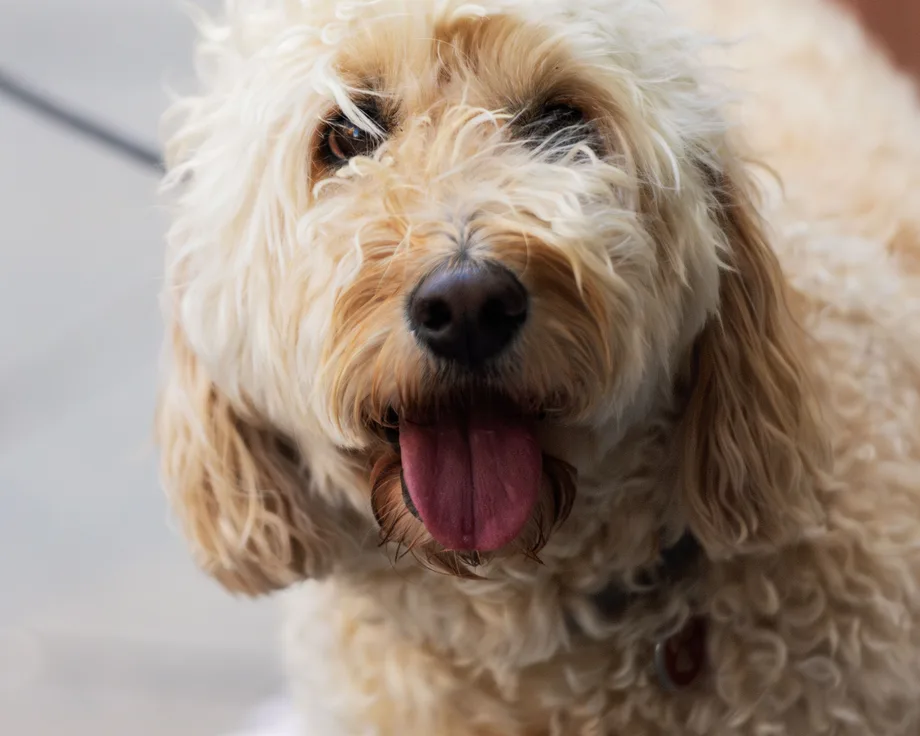
The Labradoodle has a well-proportioned body, solid and elegant. Its head is harmonious with a slightly rounded skull, lively and intelligent eyes and drooping, light ears. The coat can be curly, wavy or softer depending on the generation, with very varied colors such as black, cream, apricot, caramel, chocolate or white. Depending on the lines, there are individuals of small, medium or large size, but the whole retains an athletic and expressive silhouette.
Temperament
Temperament and personality
The Labradoodle is a gentle, sociable, affectionate and well-balanced dog. He likes the company of his family, readily seeks interaction and is generally patient with children. Intelligent and eager to please, he learns quickly and adapts well to roles as a companion dog, for mediation or assistance. His open temperament also makes it easier to live with other animals when he is properly socialized.
Living together
Living with children and other pets
On a daily basis, the Labradoodle is playful, active and close to its humans. It enjoys walks, scent games, water activities and regular interactions with its household. It can live in an apartment if its exercise needs are met, but it fully benefits from an environment with access to a secure outdoor space. Without sufficient activity, it can become restless or develop boredom-related behaviors.
Training
Training and socialization
The Labradoodle responds very well to positive training based on reward, consistency and cooperation. Its intelligence and its desire to please make learning basic commands as well as more advanced exercises easier. Socialization must start early and remain varied in order to strengthen its ease with humans, dogs and other animals. Gentle but consistent training makes it possible to obtain a reliable companion that is pleasant to live with.
Budget
Price and budget for the Labradoodle
The price of a Labradoodle varies mainly depending on the seriousness of the breeding kennel, the selection work, the desired size, the reputation of the lineage and the puppy’s level of socialization. For this type of dog not recognized by the FCI, it is particularly important to assess health and behavioral quality rather than focusing only on the price.
See cost breakdownHealth
Health at a glance
The Labradoodle is generally a fairly robust dog, but it can inherit predispositions from the parent breeds. Like many medium to large dogs, it deserves careful monitoring of the musculoskeletal system, the eyes and the ears. The quality of the selection, maintaining an appropriate weight and regular veterinary follow-up play an important role in its long-term health.
Prevention and things to watch forNutrition
Feeding your pet well
The Labradoodle’s diet must be adjusted to its size, age, activity level and body condition. A complete, good-quality food, highly digestible and rich in suitable animal proteins helps support its muscle mass, energy and the quality of its coat.
Our feeding adviceDid you know?
Fun facts and popularity
The name Labradoodle is formed from Labrador and Poodle, the English name for the Poodle. The Labradoodle first attracted attention for its potential abilities as a guide dog and for its image as a hypoallergenic dog. Generations such as F1, F2 or F3 are often distinguished according to the degree of crossbreeding, which explains a certain variability in type, coat and size from one individual to another.
.jpg)