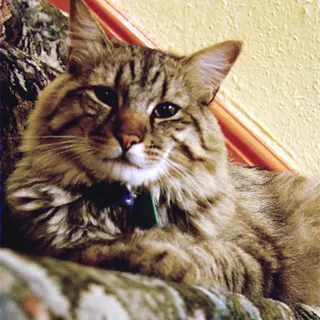
A menu for every age
Needs change over time
Kitten : Choose a complete food for growth, rich in animal proteins, divided into several small meals.
Adult : Adjust the ration to activity and neutering while regularly monitoring body condition.
Senior : Have the weight, teeth and kidney function checked in order to adapt the diet with the veterinarian.
Which food?
Kibble, wet food, or home-cooked diet?
High-quality kibble, a complete wet diet or a mixed ration are suitable. Wet food contributes to water intake; kibble can also be slightly moistened if it is eaten quickly.
Amounts
How much should you give?
The ration indicated by the manufacturer should serve as a starting point, then be adjusted according to body condition, activity and the veterinarian's advice.
| Weight | Daily amount | Meals/day |
|---|---|---|
| 2 - 3 kg | 35 - 50 g | 2 - 3 |
| 3 - 4 kg | 45 - 60 g | 2 |
| 4 - 5 kg | 55 - 70 g | 2 |
Change
Managing the food transition
Any change of food must be gradual over about one week, gradually increasing the proportion of the new food in order to limit digestive upsets.
Hydration
Water: do not overlook it
Fresh water must remain available at all times. Several water points away from the litter box, or a fountain, can encourage consumption.
Little extras
Treats, in moderation
Treats should remain occasional and represent less than 10% of the daily energy intake. They can be used during training sessions by reducing the main ration accordingly.
Good habits
For a top-notch bowl
- Weigh the daily ration rather than filling the bowl freely.
- Adjust the quantity to the actual energy value of the chosen food.
- Favor a share of wet food to support hydration.
- Use treat-dispensing toys to stimulate its foraging behavior.
Never give
Chocolate, alcohol, coffee and other sources of caffeine, onions, garlic, grapes, products containing xylitol, cooked bones and human medications are dangerous for the cat and can cause poisoning, digestive disorders or serious injuries.