Origins
Where does it come from?
The American Shorthair has its origins in Europe, notably in Great Britain. Imported to the American continent by European settlers several centuries ago, it descends from the European alley cat. Its primary mission was to protect the cereals of American farmers against rodents. At the beginning of the 20th century, breeders launched a targeted breeding program. The breed, previously called "Domestic Shorthair", then took the name "American Shorthair". After difficult beginnings, it gradually established itself in many homes and today enjoys strong popularity in the United States and Japan.
Appearance
What does it look like?
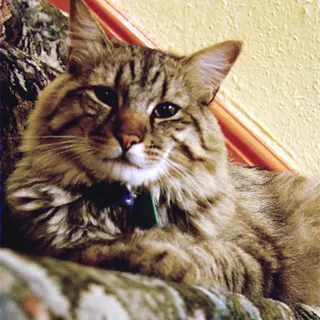
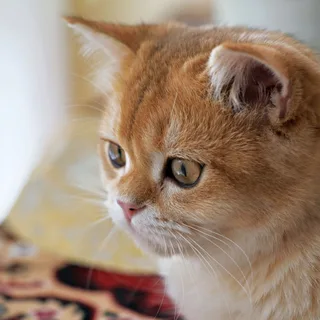
The American Shorthair has a medium-sized body, muscular and slender. Its head is round, with developed cheeks and a square muzzle. Its ears, medium and slightly spaced, are rounded at the tip. Its round and well-spaced eyes often show a color harmonized with the coat. Its tail, rather long and thick at the base, tapers to a rounded tip. Its short, thick, even and dense coat offers it good protection against the cold. Many colors are accepted, from chocolate to lilac, but the silver classic tabby coat, with a bright silvery background and contrasting black markings, is the most emblematic.
Temperament
Temperament and personality
Calm, independent and affectionate, the American Shorthair is also described as intelligent, skillful, agile and loyal. He enjoys the company of his owner and cuddles while maintaining his autonomy.
Living together
Living with children and animals
He likes to play with his owner and children, and willingly shares his space with other cats or dogs. A gifted hunter, he enjoys outings, meetings with his fellow cats and spaces where he can expend energy. He can adapt to apartment living, but easy access to the outdoors remains preferable for his well-being.
Training
Training and socialization
The American Shorthair is trained through consistency, play, and measured rewards. It easily learns the litter box, the scratching post, and a few routines if the environment is stable. Avoid constraint: a well-balanced cat responds better to calm interactions.
Budget
American Shorthair price & budget
The purchase price varies depending on the cat and its origin. You should also plan an annual budget for its routine maintenance.
View cost breakdownHealth
Health at a glance
The American Shorthair has robust health inherited from its origins as an outdoor cat. It must nevertheless benefit from the usual veterinary prevention and monitoring adapted to its outings.
Prevention & watch pointsDiet
Feed it well
Depending on its morphology and daily activity, the American Shorthair consumes on average 80 to 180 grams of kibble per day. The ration must be adjusted and monitored due to its predisposition to obesity.
Our feeding adviceDid you know?
Anecdotes and popularity
The American Shorthair is also called "American Shorthair". Particularly widespread in the United States, it also enjoys strong popularity in Japan.