Origins
Where does it come from?
Originally from the Netherlands, the Dutch Shepherd long accompanied shepherds in very varied missions: driving and protecting herds, guarding farms, watching over poultry-yard animals and pulling small carts. Its versatility then opened the doors to guard work, the police, the army and many canine sports. The first breed standard dates from 12 June 1898. Recognized by the FCI in 1955 under number 223, the breed remains relatively rare outside its country of origin. The standard distinguishes three varieties according to coat texture: short, long and rough.
Appearance
What does it look like?
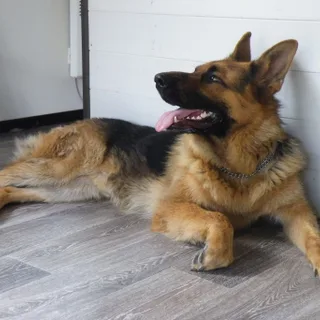
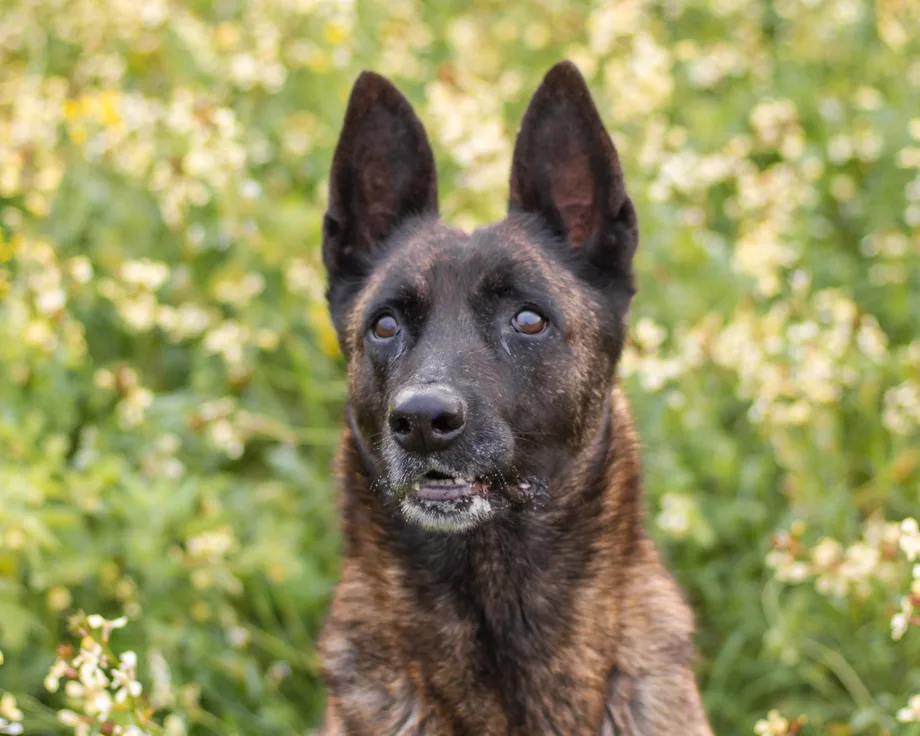
The Dutch Shepherd is a muscular, enduring and harmoniously built dog, slightly longer than tall. Its head, well-proportioned and dry, has a flat skull, a slight stop, dark almond-shaped eyes and medium-sized ears set high and carried erect. The back is straight and solid, the chest deep and the tail reaches approximately the hock. The coat is brindle on a golden or silver base. Depending on the variety, the hair is short and close, long and straight, or harsh and tousled, always associated with a protective undercoat.
Temperament
Temperament and personality
Intelligent, vigilant and very loyal, the Dutch Shepherd develops a strong bond with its owner and family. Courageous without needing to be unnecessarily aggressive, it has a marked territorial instinct and is naturally protective. It is a lively, hardworking dog capable of taking initiative. Well socialized, it can be an excellent companion for children and live with other dogs, but its energy, herding instinct and reserve toward strangers require consistent guidance.
Living together
Living with children and other pets
On a daily basis, the Dutch Shepherd seeks closeness to its humans and copes poorly with a passive life or long periods of isolation. It needs active outings, running, retrieving games, obedience exercises and mental challenges. A house with a secure outdoor space suits it particularly well, without replacing walks. Apartment living remains possible only with significant physical and cognitive expenditure every day.
Training
Training and socialization
His intelligence and his taste for work allow rapid learning, but his lively and autonomous temperament requires early, fair and consistent training. Positive methods based on play, reward and clear instructions are the most suitable. Socialization must begin from the youngest age and include people, dogs, other animals, environments and handling. Activities such as obedience, tracking, agility or working sports help him channel his energy.
Budget
Price and budget for the Dutch Shepherd
The purchase price varies depending on the lineage, the coat variety, the reputation of the breeding kennel, the health screenings carried out and the dog's intended purpose, companionship, sport or work. The relative rarity of the breed can also influence availability.
See cost breakdownHealth
Health at a glance
The Dutch Shepherd is generally robust and hardy. Like many active medium to large dogs, it can nevertheless be affected by certain joint conditions and, depending on the lines, by eye disorders. Serious selection, growth without excess, age-appropriate activity and maintaining an optimal weight contribute greatly to its health.
Prevention and things to watch forNutrition
Feeding your pet well
The Dutch Shepherd needs a complete, digestible diet adapted to its age, its weight, its activity level and its physiological condition. Its ration must support its musculature without promoting overweight.
Our feeding adviceDid you know?
Fun facts and popularity
The Dutch Shepherd is recognizable by its brindle coat, an essential characteristic of the breed. Its three coat varieties belong to the same breed, even if their maintenance differs. Historically able to fulfill almost all the tasks of a farm, it retains today this remarkable versatility in guarding, search, service work and canine sports.