A menu for every age
Needs change over time
Kitten : Complete growth food, divided into several small meals.
Adult : Controlled ration, adapted to sterilization and indoor living.
Senior : Highly digestible food, while monitoring kidneys, teeth and appetite.
Which food?
Kibble, wet food, or home-cooked diet?
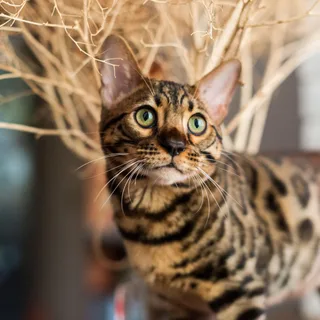
High-quality kibble, possibly supplemented with a well-formulated wet diet, is suitable for this active cat. The exact choice depends on age, neutering, activity level, and the veterinarian’s recommendations.
Amounts
How much should you give?
The daily amount must be adjusted according to the cat’s weight, age, neutering and actual activity. It is better to think in terms of a measured ration than free-feeding if activity is insufficient.
| Weight | Daily amount | Meals/day |
|---|---|---|
| 3 - 4 kg | 54 - 78 g | 2 |
| 4 - 6 kg | 70 - 100 g | 2 |
| 6 - 7 kg | 86 - 121 g | 2 |
Change
Managing the food transition
Any change in diet must be made gradually over several days to limit digestive disorders and promote good acceptance of the new food.
Hydration
Water: do not overlook it
Fresh water must remain available at all times. Good hydration is particularly important in cats fed mainly on kibble.
Little extras
Treats, in moderation
Treats should remain occasional and be included in the calculation of the daily ration. They can be useful as a reward during games and simple learning.
Good habits
For a top-notch bowl
- Weigh the daily ration rather than feeding by eye.
- Split the ration into several servings if that helps regulate appetite.
- Combine feeding with search games or playful dispensers.
Never give
Chocolate, onion, garlic, grapes, alcohol, caffeine, cooked bones and certain sweeteners such as xylitol are dangerous for the cat and can cause serious digestive, neurological, renal or hematological disorders.