Origins
Where does it come from?
The Bouvier des Flandres originates from the historic region of Flanders, straddling Belgium and France. Resulting from a selection of local herding dogs, it was first used to drive and guard cattle herds. Its strength, intelligence and courage later earned it guarding and defense duties on farms. Recognized by the FCI since 1955 under number 191, it belongs to group 1. Today, it remains a versatile working dog and can notably be used by police forces.
Appearance
What does it look like?
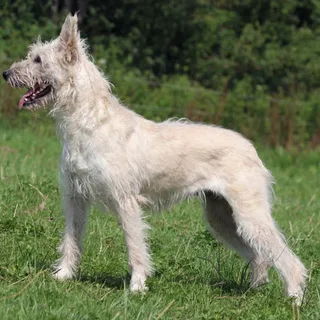
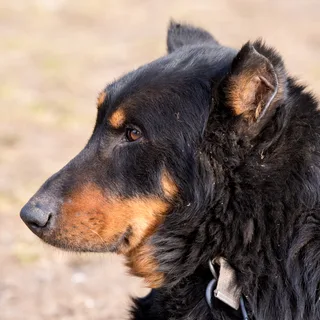
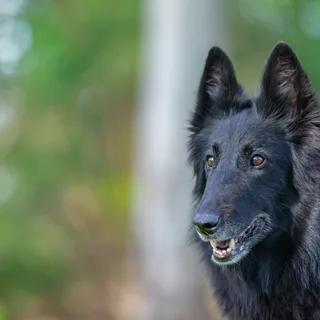
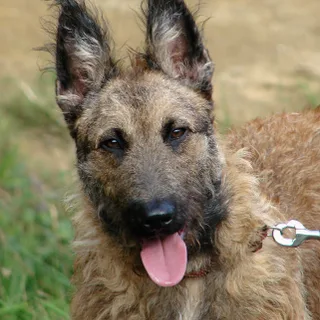
Massive and powerful without appearing heavy, the Bouvier des Flandres has a rather stocky, short and solidly muscled body. Its back and loin are short, broad and powerful, while its chest is broad and well let down. Its head, massive in appearance, remains proportionate to the body, with a developed and flat skull. The eyes, slightly oval and dark, express frankness and energy. The ears are set high, drooping, triangular and slightly rounded at the tip. The medium-length coat is abundant, dense, harsh, dry and dull, with a characteristic beard, moustache and eyebrows. The coat colour may be grey, brindle, sooty or black, and a small white star on the chest is permitted. The tail is set high in line with the spine.
Temperament
Temperament and personality
Loyal and deeply attached to his family, the Bouvier des Flandres is courageous, protective and naturally wary of strangers. He is generally affectionate with children and has a very strong guarding instinct. His assertive temperament can however lead him to be dominant with certain fellow dogs, especially those of the same sex. Calm when he has been sufficiently exercised, he remains vigilant, willing and ready to intervene when the situation requires it.
Living together
Living with children and other pets
At home, this dog can remain calm for a good part of the day, but its balance depends on sustained daily physical and mental activity. It prefers a house with a well-fenced yard to apartment living. Very close to its owners, it needs presence, activities, and varied outings. Its vigilance and reserve toward strangers make it an excellent guard dog, but its barking must be managed from a young age. Encounters with other animals are made easier by early and ongoing socialization.
Training
Training and socialization
His training must be firm, consistent and fair, without brutality. The Bouvier des Flandres learns quickly, but his assertive temperament and sometimes selective obedience require an experienced, calm and steady owner. High-quality early socialization is essential to limit dominant behavior toward other dogs and develop measured reactions toward strangers. Short, varied sessions based on reward maintain his motivation, while regular work on recall, leash walking and barking control makes daily life easier.
Budget
Price and budget for the Bouvier des Flandres
The price of a Bouvier des Flandres varies depending on the quality of the breeding, the pedigree, the parents' health screenings, the puppy's intended purpose and the guarantees provided. The purchase cost represents only part of the budget, to which are added the feeding of a large dog, veterinary care, training and regular grooming.
See cost breakdownHealth
Health at a glance
The Bouvier des Flandres is an overall hardy dog, able to withstand cold and significant exertion. Like several large breeds, it nevertheless remains exposed to certain joint, eye, digestive and hereditary conditions. Breeding attentive to screening, controlled growth, an appropriate diet and regular veterinary follow-up help preserve its health.
Prevention and things to watch forNutrition
Feeding your pet well
This large active dog needs a complete and balanced diet, adapted to its age, its weight, its activity and its state of health. During growth, controlling energy intake and mineral balance helps protect its joint development. In adults, the ration must support its musculature without promoting weight gain.
Our feeding adviceDid you know?
Fun facts and popularity
Before the mechanization of the countryside, the Bouvier des Flandres did not just guard livestock: its power also allowed it to carry out various utilitarian tasks on farms. Its beard and thick eyebrows contribute greatly to its characteristic expression. The FCI standard bears number 191 and notably accepts grey, brindle, charcoal or black coats.