Origins
Where does it come from?
The Tosa originates from Japan, in the province of Tosa from which it takes its name. It was developed as a fighting dog by crossing the Shikoku-Ken with several Western breeds, notably the Bulldog, the Mastiff, the German Pointer and the Great Dane, with probably contributions from the Saint Bernard and the Bull Terrier. The breed then evolved into a large guard and companion molosser with a calmer temperament. It was definitively recognized by the Fédération Cynologique Internationale in 1964.
Appearance
What does it look like?
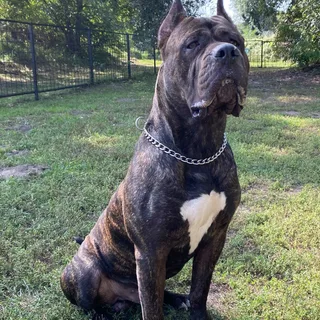
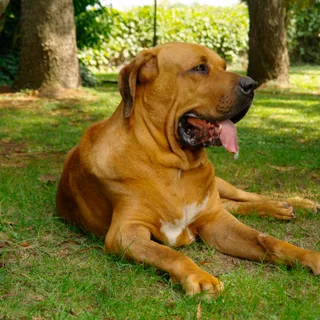
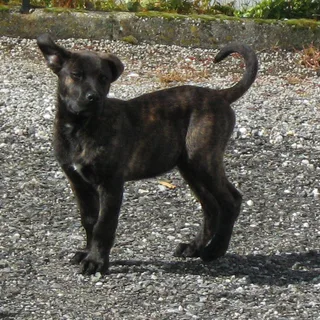
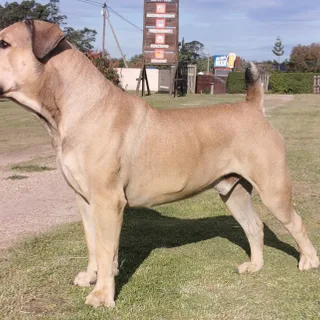
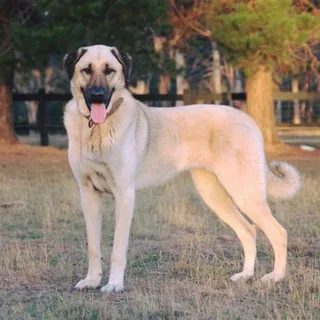
The Tosa is a very large dog, powerful, massive and yet harmonious in its lines. Its body is robust, with a straight back, a broad and muscular loin, a full and high chest and a tucked-up belly. The head is broad with a square muzzle and a pronounced stop. The ears are small, hanging against the cheeks, the dark brown eyes express calm and dignity, and the tail is strong at the base then tapers towards the tip. The coat is short, harsh to the touch and fairly dense. The most common coat colors are fawn, apricot, red, black or brindle, sometimes with a little white on the chest and feet.
Temperament
Temperament and personality
The Tosa is a calm, patient and even-tempered dog. It is generally discreet, not very barky and very observant. Very attached to its home, it shows a marked guarding instinct and great courage when it perceives a threat. Well socialized, it can be gentle and stable on a daily basis, but its dominant temperament and its power require serious and consistent handling.
Living together
Living with children and animals
On a daily basis, the Tosa likes clear routines, long walks and contact with its family. It is not hyperactive, but it needs space, guidance and regular exercise to stay balanced. Its impressive stature is often enough to deter, which makes it a naturally credible guard dog. With other dogs, especially of the same sex, cohabitation may require vigilance.
Training
Training and socialization
The education of the Tosa must begin early, with thorough socialization and stable rules. He learns properly when he is guided by a calm, firm and fair owner, without brutality or a permanent power struggle. The priority is to obtain a dog that is perfectly controllable in all circumstances, given his power and protective instinct. This breed is better suited to people already accustomed to large dogs with character.
Budget
Tosa price & budget
The purchase price of the Tosa varies mainly according to the quality of the bloodline, the reputation of the breeder, the socialization work and the follow-up offered. Its maintenance cost must also be anticipated, because a very large dog entails regular expenses that are higher than average.
View cost breakdownHealth
Health at a glance
The Tosa is considered a robust and resilient dog. Its large size nevertheless requires careful management of growth, weight, joints and physical exertion in order to preserve its locomotor comfort over the long term.
Prevention & watch pointsDiet
Feed it well
The Tosa needs a quality diet, suited to large dogs and adjusted to its age, weight and activity level. The ration must support its muscle mass without promoting overweight.
Our feeding adviceDid you know?
Anecdotes and popularity
The Tosa is also called Tosa Inu, Japanese Dogue or Japanese Mastiff. Despite its history linked to fighting in Japan, the well-selected and well-educated subject is today sought after for its calm, its deterrent presence and its attachment to its social group. In France, the purebred Tosa is part of the 2nd category dogs, which implies specific legal obligations for its holder.