Origins
Where does it come from?
Originally from South Africa, the Boerbull, also called Boerboel, was developed by Dutch settlers from the Brabanter Bullenbijter, a powerful molosser with hunting abilities. Crossbreeding with other European dogs and local dogs shaped a farm guardian capable of protecting herds, homes and their occupants against predators. A more structured selection was put in place from the 1960s. Despite its long history and its working qualities, the breed does not have a recognized FCI group.
Appearance
What does it look like?
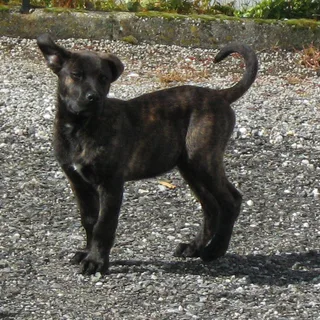
The Boerbull is a giant dog, stocky and massive, whose strong bone structure supports very developed musculature. Its broad head, rather short and square, has powerful jaws, brown eyes with a gaze both gentle and determined, as well as drooping triangular ears. Its back is straight, its chest broad and its loin short and solid. The short, smooth coat covers thick skin. The coat shows different shades of fawn or brindle, with red, brown or grey, sometimes accompanied by a small white mark on the chest.
Temperament
Temperament and personality
Courageous, intelligent and very protective, the Boerbull is generally calm and affectionate with its family. Its guarding instinct is particularly pronounced and it readily analyzes a situation before reacting. Well socialized, it can be gentle with children and live with other animals, a legacy of its past as a farm dog. Vigilance remains necessary with dogs of the same sex, especially in males, who may seek to assert themselves.
Living together
Living with children and animals
At home, the Boerbull knows how to remain calm when it benefits from sufficient physical exercise. It naturally watches over its territory, is reserved toward strangers and barks little, its imposing presence already constituting a powerful means of deterrence. It needs space, regular contact with its family and two good daily outings. Its strength and temperament make responsible handling, ongoing socialization and strict compliance with local regulations essential.
Training
Training and socialization
Education must begin very early and combine consistency, calm, firmness and respect, without brutality or a power struggle. Intelligent and receptive, the Boerbull learns well when the rules are consistent and the sessions remain short and motivating. Socialization must multiply positive encounters with people, dogs, other animals and different environments. Leash walking, recall, acceptance of the muzzle and impulse control are priorities given its size and the French legal framework.
Budget
Boerboel price & budget
The price varies depending on the country of breeding, the bloodline, health screenings, the breeder's reputation and the dog's destination. In France, the legal status of this type of dog must imperatively be checked before any steps are taken, because the acquisition, transfer and importation of a dog falling under category 1 are prohibited.
View cost breakdownHealth
Health at a glance
The Boerbull benefits from overall robust health and a coat well suited to the South African climate. Like all giant dogs, however, it must be monitored for joint disorders and receive a precisely adjusted diet in order to limit excess weight. Slow growth, age-appropriate exercise and screening of breeding dogs help preserve its mobility.
Prevention & watch pointsDiet
Feed it well
This giant dog needs a complete, digestible diet adapted to its life stage. The puppy’s growth must remain gradual, with a controlled mineral balance, while the adult must receive a ration proportionate to its activity in order to avoid joint overload.
Our feeding adviceDid you know?
Anecdotes and popularity
The name Boerboel combines the Afrikaans word "Boer", which refers to farmers of Dutch origin in South Africa, with "boel", used to evoke a large dog. Selected to defend isolated farms, this molosser had to be powerful enough to deter predators while remaining close to the family. In France, its status requires particular attention, because dogs showing the morphology of mastiffs not registered in a recognized studbook may fall under category 1.