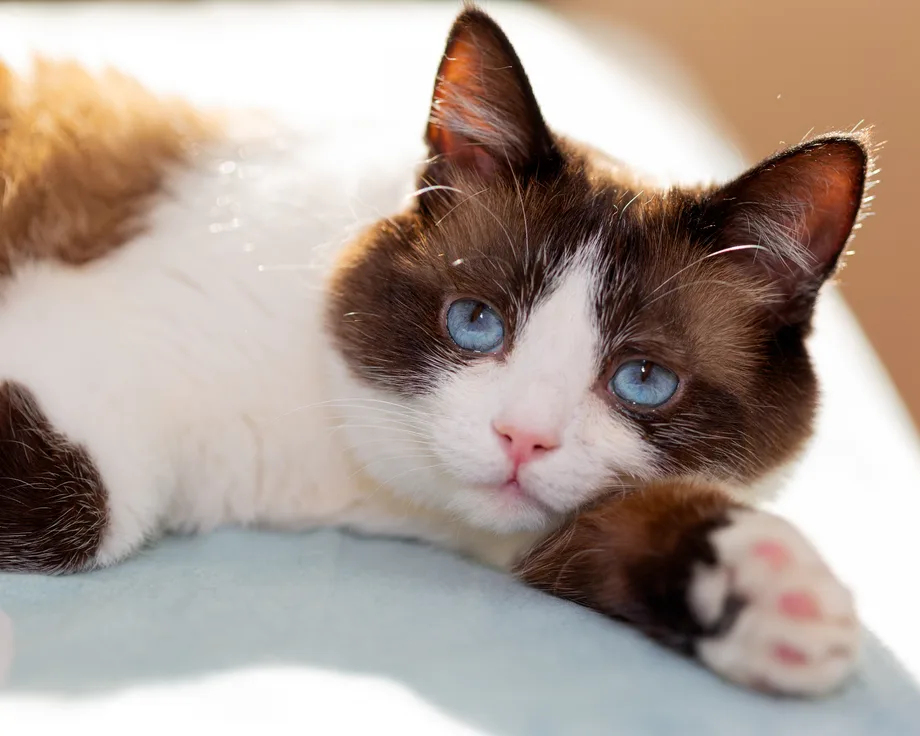
A menu for every age
Their needs change as they grow
Kitten: A growth diet, more energy-dense and split into several meals, supports bone and muscle development.
Adult: A complete, well-balanced ration helps maintain ideal weight and muscle mass without excess.
Senior: A more digestible food, monitored with the veterinarian, helps preserve overall condition, lean mass, and daily comfort.
Which food?
Kibble, wet food, or homemade meals?
High-quality kibble or a complete wet diet with a good composition suit the Snowshoe well, with a base centered on animal proteins. The precise choice must take into account age, activity, neutering and any individual sensitivities.
Portion sizes
How much should you feed?
The daily amount depends mainly on weight, the energy density of the food and lifestyle. A neutered indoor cat will often need a more controlled ration than a very active subject. The manufacturer's guidelines must always be adjusted according to the actual body condition.
| Weight | Daily amount | Meals per day |
|---|---|---|
| 3 - 4 kg | 40 - 55 g de croquettes | 2 |
| 4 - 5 kg | 50 - 65 g de croquettes | 2 |
| 5 - 6 kg | 60 - 75 g de croquettes | 2 |
Changing food
How to switch foods successfully
Any change in diet must be introduced gradually over several days in order to limit digestive upsets and improve acceptance. Mixing the old and the new food while gradually increasing the proportion of the new one remains the safest method.
Hydration
Don't overlook water
Good hydration is essential, especially if the diet is mostly dry. The Snowshoe must always have access to clean, fresh water, ideally in several places around the house. A fountain can encourage cats that drink little.
A little extra
Treats in moderation
Treats should remain occasional and represent a small part of the daily intake. They can be useful for bonding, play or training, provided they remain simple, digestible and well portioned.
Good habits
Make mealtimes count
- Weighing the ration helps avoid invisible day-to-day excesses.
- Splitting the food into at least two meals promotes better appetite management.
- Adjusting the ration after sterilization limits the risk of weight gain.
Never feed these foods
Chocolate, onion, garlic, grapes, alcohol, caffeine, cooked bones and xylitol are dangerous for the Snowshoe as for other cats. They can cause digestive, neurological, kidney disorders or severe poisoning and must never be given.