Origins
Where does it come from?
The Polish Greyhound, also called Chart Polski, is an ancient breed present in Poland for several centuries, probably derived from Asian sighthounds of the Saluki type with later contributions from Borzoi and Greyhound. Used for pursuing game over vast territories, it has retained a powerful and hardy build. The FCI recognized it on a provisional basis in 1989 and then definitively in 2001.
Appearance
What does it look like?
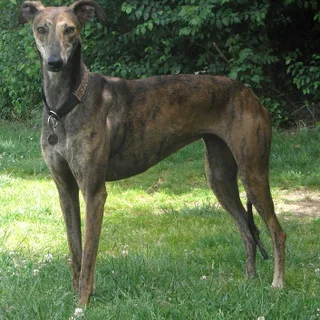
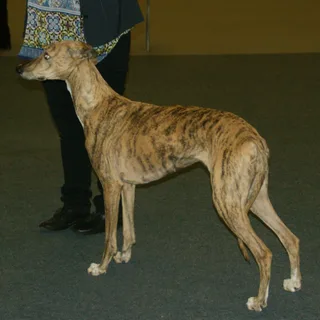
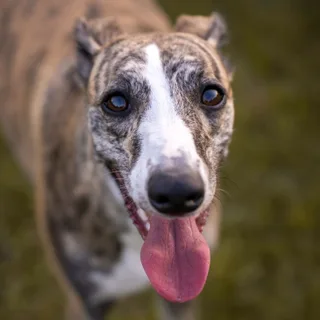
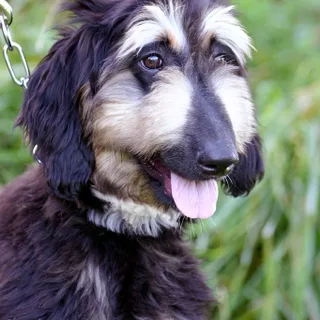
The Polish Greyhound is a large athletic dog, solidly built, with a strong bone structure and well-developed musculature without heaviness. Its head is long and powerful, its neck muscular, its chest deep and its topline slightly arched over the loin. Its coat is short, firm and supple to the touch, sometimes a little longer at the withers, on the back of the thighs and under the tail.
Temperament
Temperament and personality
Confident, courageous and rather reserved, the Polish Greyhound is calm in the house while remaining very responsive outside. He is independent without being unsociable and retains a strong chasing instinct. Attached to his home, he is generally neither exuberant nor demonstrative, but develops a strong bond with those close to him.
Living together
Living with children and animals
On a daily basis, this dog appreciates space, long outings and the possibility to really exert itself safely. It can live calmly at home after the effort, but tolerates poorly a life that is too confined or monotonous. Its hunting instinct requires vigilance outdoors, especially in the presence of small game or in unfenced areas.
Training
Training and socialization
Training must start early with a recall worked on patiently, careful socialization and consistent methods. The Polish Greyhound is sensitive to harsh approaches, to which it responds poorly, whereas it progresses better with positive reinforcement, calm and measured firmness. Managing the chase instinct is part of the educational priorities.
Budget
Polish Greyhound price & budget
The purchase price varies depending on the lineage, the reputation of the kennel, compliance with the standard and the rarity of the breed. For such a confidential dog, the quality of selection, early socialization and health screenings of breeding dogs matter more than an overly low entry-level price.
View cost breakdownHealth
Health at a glance
The Polish Greyhound is considered a generally robust, solid and hardy dog. Like many large athletic dogs, it nevertheless deserves careful monitoring of the joints, digestion and eyes, with a lifestyle adapted to its morphology and activity level.
Prevention & watch pointsDiet
Feed it well
The Polish Greyhound needs a complete, high-quality diet, formulated for a large active dog and adjusted to its age, body condition and activity level. The daily ration is best kept stable and well digested rather than too rich or given irregularly.
Our feeding adviceDid you know?
Anecdotes and popularity
The name Chart Polski is still widely used outside France. Contrary to the very slender image associated with certain sighthounds, this breed stands out for a more powerful and rustic build, shaped by hunting on demanding terrain. All coat colours are accepted by the standard.