Origins
Where does it come from?
The Spanish Greyhound descends from ancient Asian sighthounds introduced into the Iberian Peninsula as early as Antiquity, probably by the Romans. Used for a long time for hare hunting, it is considered as one of the ancestors of the Greyhound. The breed was definitively recognized by the FCI in 1971 and its current official standard was published in 1982.
Appearance
What does it look like?
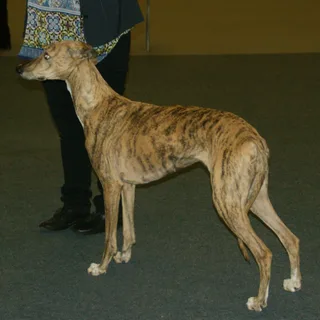
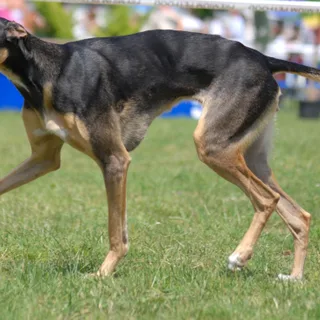
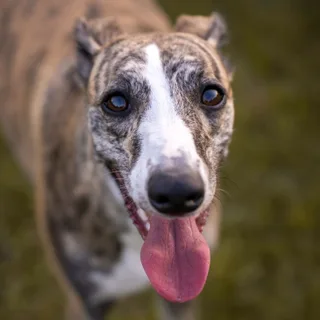
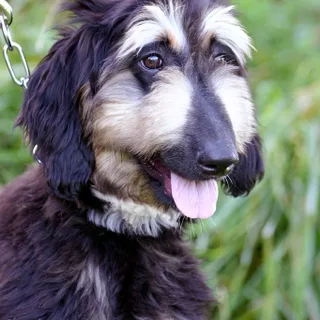
The Spanish Greyhound is a large, harmonious and slightly elongated dog, with a compact bone structure and a supple silhouette. Its head is long and lean, its neck elongated, its back straight and long, and its tail very long, carried low. Its coat is most often short, close and soft, with the existence of a harder, medium-long variety. All colors are accepted, with a traditional preference for brindle fawn and black.
Temperament
Temperament and personality
Balanced, gentle and sensitive, the Spanish Greyhound shows itself to be very attached to its family. It generally remains reserved with strangers without being aggressive and has no real vocation as a guard dog. Its background as a hare-hunting dog gives it liveliness, but it also knows how to be calm and discreet at home.
Living together
Living with children and animals
This sighthound needs to run regularly to stay well on its feet. Indoors, it can be calm, clean and rather discreet, but it thrives above all when it has space and long daily outings. A large, well-fenced garden is a more suitable living environment than an apartment.
Training
Training and socialization
The Spanish Greyhound learns willingly when one works with patience, gentleness and consistency. Its sensitivity requires avoiding any brutality, which would harm its trust and its progress. A calm, coherent and positive education makes it possible to obtain a companion that is pleasant to live with and reliable on a daily basis.
Budget
Spanish Greyhound price & budget
The acquisition budget for a Spanish Greyhound depends mainly on the seriousness of the breeding, the quality of socialization and the lineage. You must also anticipate the ongoing costs related to food, veterinary follow-up and the daily upkeep of a large active dog.
View cost breakdownHealth
Health at a glance
The Spanish Greyhound is overall a hardy and rather resilient dog. Its general health is good, but its morphology as a great runner requires orthopedic and digestive vigilance, as well as careful management of exertion depending on the weather.
Prevention & watch pointsDiet
Feed it well
The Spanish Greyhound needs a complete, digestible diet adapted to its size as a large sporting dog. The ration must take into account its age, its body condition and its level of exercise to support its muscle mass without promoting overweight.
Our feeding adviceDid you know?
Anecdotes and popularity
The Spanish Greyhound is also known under the names of Galgo Español and Galgo Greyhound. Historically selected for hare hunting, it is renowned for its typical sighthound gallop and its great endurance. Its ancient link with other European sighthounds explains its often-mentioned relationship with the Greyhound.