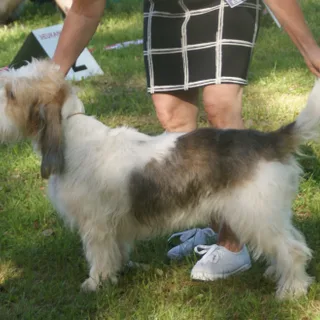
A menu for every age
Needs change over time
Puppy : A growth diet for a medium-sized dog helps support bone, muscle and immune development without excess energy.
Adult : The ration must cover the dog's actual activity and remain well distributed to avoid greediness and digestive disorders.
Senior : With age, a more digestible and moderately energetic diet can help preserve mobility and ideal weight.
Which food?
Kibble, wet food, or home-cooked diet?
Premium kibble or a well-formulated home-prepared ration may be suitable, provided that the needs for proteins, lipids, vitamins and minerals are properly covered. The choice must take into account the dog's age, exercise intensity and any possible digestive sensitivity.
Amounts
How much should you give?
The daily amount depends mainly on weight, age, sex, activity level and lifestyle. A hunting dog in season or a very athletic subject will not have the same needs as a companion living more calmly on a daily basis.
| Weight | Daily amount | Meals/day |
|---|---|---|
| 20 - 22 kg | 331 - 455 g | 2 |
| 22 - 23 kg | 355 - 487 g | 2 |
| 23 - 25 kg | 378 - 519 g | 2 |
Change
Managing the food transition
Any dietary transition must be gradual over several days in order to limit digestive upsets. Gradually mixing the old and the new food helps improve tolerance and makes it easier to observe the dog's reaction.
Hydration
Water: do not overlook it
Clean, fresh water must remain available at all times, especially after exercise, in hot weather and during hunting periods. Good hydration contributes to recovery and digestive comfort.
Little extras
Treats, in moderation
Treats can be useful for training and recall, but they must remain moderate and integrated into the total ration. It is preferable to choose simple, digestible and low-fat rewards.
Good habits
For a top-notch bowl
- Split the daily ration into at least 2 meals.
- Avoid intense exercise just before and just after meals.
- Regularly monitor the body shape and adjust the ration if needed.
Never give
As with other dogs, chocolate, xylitol, grapes, onion, garlic, alcohol and very fatty foods should be avoided, as they can cause severe digestive disorders, poisoning, or neurological and kidney damage.