Origins
Where does it come from?
The Griffon fauve de Bretagne descends from the Fauves de Bretagne mentioned as early as the 14th century. In the 19th century, it was mainly used for wolf hunting in its region of origin. The breed was then revived and structured thanks to the Club du Fauve de Bretagne founded by Marcel Pambrun in 1949, then supported in its development by enthusiasts such as Bernard Vallée. It has been recognized by the FCI since 1954.
Appearance
What does it look like?
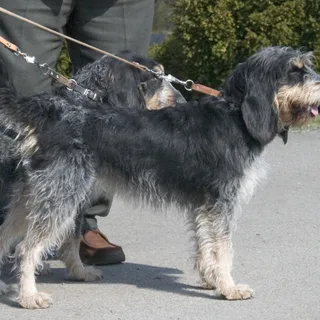
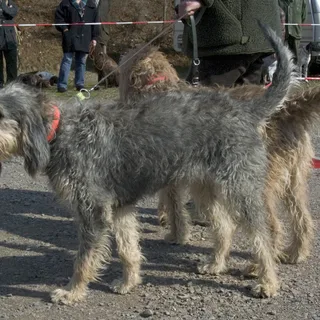
The Griffon fauve de Bretagne is a medium-sized scenthound, harmoniously built, with well-developed bone structure and musculature. Its head is long, the skull elongated, the muzzle fairly tapered and the fine ears are set at the level of the eye line. Its coat is short, very harsh and dry, never curly nor woolly. The coat color is fawn, from golden wheat to brick red, sometimes with a few sparse black hairs on the back and ears, or even a small white star on the chest.
Temperament
Temperament and personality
A courageous, determined and hardy hunting dog, the Griffon fauve de Bretagne stands out for its keen nose and its ease on varied terrain. With the family, it shows a gentle, balanced, affectionate and friendly temperament. It remains docile for a scenthound, while retaining a true passion for work.
Living together
Living with children and animals
On a daily basis, this dog needs space, activity and availability from its owner. It is more fulfilled in a house with a garden, ideally in a rural setting or near a natural area, than in an apartment. Long, frequent walks, ideally two sustained outings per day, help it stay balanced and well stimulated.
Training
Training and socialization
Training the Griffon fauve de Bretagne requires consistency and a certain firmness, without harshness. Its relative obedience, its taste for work and its desire to please its owner are good learning levers. Positive reinforcement and varied exercises generally give good results.
Budget
Griffon Fauve de Bretagne price & budget
The purchase price of the Griffon fauve de Bretagne remains variable depending on the breeder, the lineage, the dog's age and its intended purpose. You must also anticipate routine maintenance costs throughout the year.
View cost breakdownHealth
Health at a glance
The Griffon fauve de Bretagne is a robust and hardy dog. When it benefits from a suitable lifestyle, a quality diet and regular veterinary follow-up, the breed does not present any marked general fragility.
Prevention & watch pointsDiet
Feed it well
The Griffon fauve de Bretagne needs a quality diet, adapted to its age, size and level of physical activity. Its needs may increase during the hunting season or during periods of sustained exercise.
Our feeding adviceDid you know?
Anecdotes and popularity
The Griffon fauve de Bretagne was long appreciated for wolf hunting in the West of France. Its rescue in the 20th century owes much to determined enthusiasts who revived the breeding of the breed. It is today recognized by several canine organizations, including the FCI, the UKC and the KC.