Cats

Greater Swiss Mountain Dog: temperament, price, health, and breeders

Switzerland

A large, calm, powerful Swiss dog that is very attached to its family.

SizeLargeLife expectancy10–12 yearsBudget≈ 170 €/monthKitten1,100–1,600 €

Right choice?

Is it right for you?

Family & childrenExcellent
Daily activity requiredModerate
Apartment livingLimited
First-time ownerFairly good
Other petsExcellent
Tolerance for being aloneLimited
Guarding instinctVery good

Pros & Cons

  • Calm in everyday life : His calm temperament makes him a pleasant companion when he has space and stable reference points.
  • Very attached to his family : He seeks the closeness of his loved ones and develops a strong bond with his household.
  • Good guard dog : Alert and self-confident, he naturally watches over his environment without being fearful.
  • Not well suited to apartment living : Its large size and need for space make life in cramped housing difficult.
  • Training not to be neglected : Its power and confident temperament require a framework established from the earliest age.
  • Marked shedding : Hair loss can be significant in spring and autumn.

Who is it for?

Ideal for

  • House with fenced garden : This setting offers it the space and comfort necessary for its balance.
  • Families present : It appreciates family life and copes better with an environment where it shares daily life.
  • Calm and consistent owners : Stable and firm handling suits this large dog, sensitive to its environment.

Not recommended for

  • Apartment living : This lifestyle is not well suited to its size and its need for space.
  • Very sedentary people : Despite its calm nature, it needs long walks and regular activity.
  • Beginners without guidance : Its training and day-to-day management can be demanding for a first large-breed dog.

Portrait

What does it look like?

1,75 mHuman
66 cmGreater Swiss Mountain Dog
Height at withers
60–72 cm
Weight
35–50 kg
Coat
Medium-long, double, dense
Origin
Switzerland
Grooming
Moderate grooming

Photos & videos

Discover the Greater Swiss Mountain Dog in photos and videos: coats, sizes, and the breed’s distinctive expressions.

Origins

Where does it come from?

The Greater Swiss Mountain Dog descends from the large cattle dogs of Swiss tradition, formerly used as draft dogs and guardians of cattle herds. The breed was entered in the Swiss Stud Book in 1909, the Swiss Club of the Greater Swiss Mountain Dog was founded shortly after, then the FCI published a first standard in 1939 before a definitive recognition in 1954.

Appearance

What does it look like?

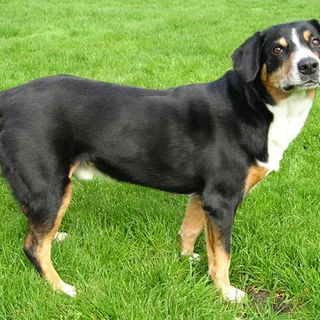
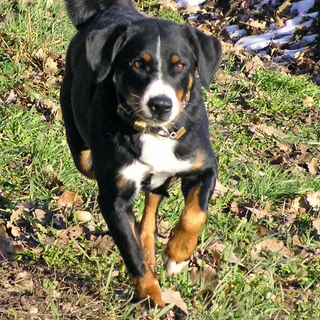
The Greater Swiss Mountain Dog is a large, powerful and robust dog, inscribed in a rectangle, with a solid bone structure and ample and regular movement. Its head is strong without being heavy, the skull broad and flat, the muzzle powerful and the nose black. Its coat is tricolour, on a black background with red-brown tan and white markings, and its hair is of medium length with a dense undercoat.

Temperament

Temperament and personality

Balanced, self-confident and calm, the Greater Swiss Mountain Dog is not fearful. He is very alert, protective and strongly attached to his family, which makes him a pleasant companion and a good guard dog without gratuitous aggression.

Affectionate Sociable Protective

Living together

Living with children and animals

Despite its calm temperament, the Greater Swiss Mountain Dog needs space, daily outings and a real family life. It thrives best in a house with a large fenced garden and tolerates apartment living poorly, especially if its need for activity and closeness is not respected.

Training

Training and socialization

His training must be undertaken early, with firmness, consistency and positive reinforcement. Intelligent but sometimes not very obedient if he lacks structure, he needs a consistent handler capable of channeling his strength without brutality.

Budget

Greater Swiss Mountain Dog price & budget

The Greater Swiss Mountain Dog is a relatively rare breed, which influences its purchase price. The overall budget is not limited to the purchase and must take into account food, veterinary care and the equipment for a large dog.

View cost breakdown

Health

Health at a glance

The Greater Swiss Mountain Dog is an overall robust dog, well equipped to face difficult climatic conditions thanks to its double, dense and tight coat. Like many large breeds, it nevertheless requires regular follow-up, well-managed growth and attentive monitoring of its general condition.

Prevention & watch points

Diet

Feed it well

The Greater Swiss Mountain Dog needs a high-quality diet, adapted to large dogs and to its activity level. Vigilance is particularly important during growth, in order to avoid excess energy intake and mineral imbalances.

Our feeding advice

Did you know?

Anecdotes and popularity

The Greater Swiss Mountain Dog is often compared to the Bernese Mountain Dog for its tricolor coat, but it differs from it by a shorter coat and a more massive build. Historically, it has long been appreciated in Switzerland as a versatile working dog, capable of pulling and guarding.
FAQ

Frequently asked questions about Greater Swiss Mountain Dog

Everything future adopters wonder about before their companion arrives.

No, this breed is not well suited to apartment living due to its large size, its need for space, and its need for daily outings.

Yes, it is very attached to its family, even-tempered, and generally very good with children when properly trained and socialized.

Yes, its shedding increases noticeably during seasonal molts, which requires more frequent brushing, even daily during those periods.

It is intelligent but not always very obedient, which requires early, consistent, positive training with an owner capable of setting a clear framework.

Ready to welcome a Greater Swiss Mountain Dog?

Find a registered, verified breeder near you, and meet your future companion with peace of mind.

View breeders