Longevity
Life expectancy
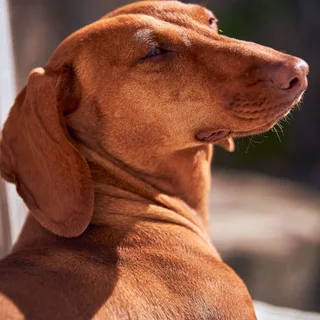
With a life expectancy of 12 to 14 years, the Drever is one of the dogs that can accompany its family for a long time when its lifestyle remains regular. Prevention, maintaining good body condition and moderate activity play an important role in this longevity.
Build
A robust breed?
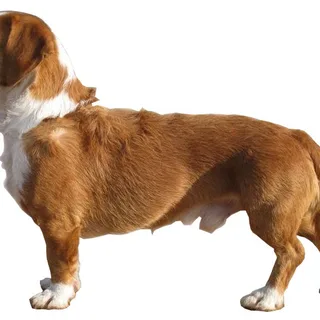
The Drever shows good overall robustness. Its solid build is an asset, but its elongated format requires staying attentive to the back, the joints and to excess weight which can increase certain sensitivities.
Watch points
What to watch for
The health vigilance of the Drever relies mainly on preventing back problems, monitoring the drooping ears, and controlling weight. Regular observation after outings and routine veterinary follow-up make it possible to intervene early in case of discomfort or an abnormal sign.
Entropion : a misposition of the eyelid can irritate the eye and require veterinary care.
Herniated disc : its elongated body requires particular vigilance regarding back pain and disc disorders.
Obesity : a diet that is too rich or a lack of activity promote weight gain, with an impact on the back and joints.
Otitis : its drooping ears require regular monitoring to limit moisture and inflammation of the ear canal.
Climate
Cold and heat tolerance
The Drever tolerates heat and intense cold moderately. It is advisable to adapt the duration and intensity of outings according to the weather, with particular attention during hot and humid periods.
Weight
Tendency to gain weight
The Drever can gain weight if its diet is not adjusted to its activity. It is useful to measure portions, limit treats and maintain regular walks to preserve its figure and reduce pressure on the back and joints.
Daily life
Good habits to keep it healthy
- Regularly check the condition of the ears after outings.
- Maintain a stable weight to protect the back and joints.
- Consult promptly in case of back pain or reduced mobility.
- Ensure regular veterinary follow-up throughout life.
Vaccination
Drever vaccines: vaccination schedule
Which vaccines for a Drever? Like all cats, the Drever receives essential vaccines from 8 weeks old: Typhus (panleukopenia) and Coryza. The kitten primary vaccination for Drever is given in several injections 4 weeks apart, followed by a first booster at 1 year, even if it lives in an apartment. Depending on its lifestyle (outdoor access, multi-cat household, shows, travel), your veterinarian may complete the protocol with vaccines against Feline leukemia (FeLV), Rabies and Chlamydiosis.
| Vaccine | Primary series | First booster | Then | Who for? |
|---|---|---|---|---|
Typhus (panleukopenia)Core Feline panleukopenia (cat parvovirus) | 8 weeks · 12 weeks · 3 months | 1 year | every year | All pets |
CoryzaCore Feline herpesvirus and calicivirus | 8 weeks · 12 weeks · 3 months | 1 year | every year | All pets |
Feline leukemia (FeLV)Lifestyle-based Feline leukemia virus | 8 weeks · 12 weeks | 1 year | every year | Outdoor cats, cats living in a group or in a cattery |
RabiesLifestyle-based Rabies | 12 weeks | 1 year | every year | Mandatory for travel abroad, cat shows and most boarding kennels |
ChlamydiosisLifestyle-based Chlamydia felis (contagious conjunctivitis) | 8 weeks · 12 weeks | 1 year | every year | Cats living in groups, catteries, show cats |
Adult Drever vaccine boosters are annual for cat flu and leukemia if it goes outdoors; for panleukopenia, a booster every three years is often sufficient after the first booster. Your veterinarian will adjust the schedule to your cat’s lifestyle.
Which boosters for your Drever?
Enter your companion’s age: we list the vaccines to do now and the next boosters.
Adopting well
Adopting a healthy Drever
A regular clinical examination, locomotor monitoring and ear checks are particularly useful in this breed. In the event of back discomfort, reduced activity or pain, a prompt consultation is recommended.
This information is provided for guidance only and does not replace a veterinarian’s advice. If you have any concerns about your pet’s health, consult a professional.