Origins
Where does it come from?
A breed of German origin, the Dachshund has been bred since the Middle Ages from bassets used for digging out. It established itself as an excellent hunting dog, notably for the badger and the fox, thanks to its elongated body, its courage and its ability to move forward in burrows. The German Dachshund Club was created in 1888 and the breed was definitively recognized by the FCI in 1955.
Appearance
What does it look like?
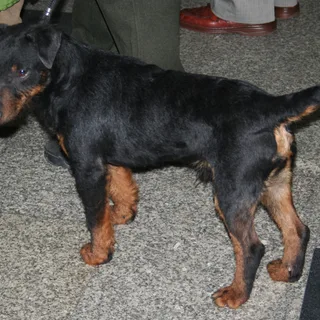
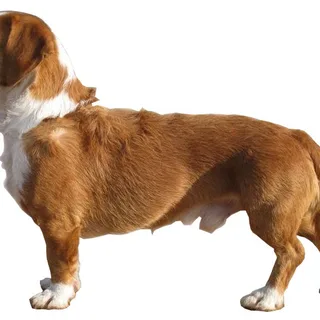
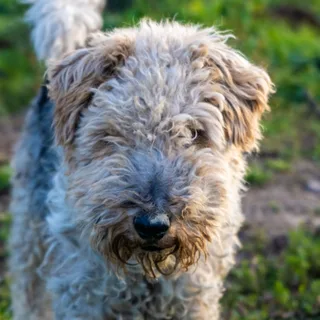
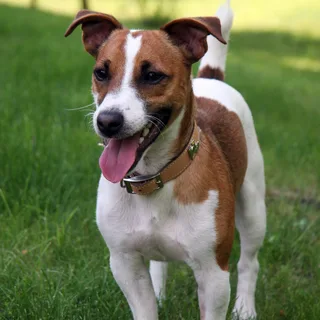
The Teckel is a dog low on legs with an elongated body, solid and well-muscled. Its head is long, its ears are drooping and rounded, and its expression is lively. The breed exists in three sizes - standard, miniature and kaninchen - as well as in three coat varieties - smooth, wire and long - which explains similar silhouettes but different coat finishes.
Temperament
Temperament and personality
Intelligent, playful and full of liveliness, the Dachshund has a strong-willed temperament. He is attached to his owner, curious, often bold and can be stubborn or dominant if he lacks structure. His past as a hunting dog gives him a real taste for exploration, scents and personal initiative.
Living together
Living with children and animals
On a daily basis, the Dachshund likes to take part in family life while keeping a certain independence. He enjoys regular walks, games and activities that engage his sense of smell. He can be vocal and vigilant, which makes him a small dog that is very present in the house despite his compact size.
Training
Training and socialization
Training the Dachshund requires firmness, patience and consistency. He learns well when sessions are short, playful and consistent, but his strong-willed temperament requires setting clear rules very early. Early socialization is recommended to channel his wariness and his chasing instinct.
Budget
Dachshund price & budget
The purchase price of the Dachshund varies depending on the lineage, the size variety, the coat type and the quality of the breeding. Beyond the initial price, annual upkeep must include quality food, veterinary follow-up and routine care.
View cost breakdownHealth
Health at a glance
The Teckel is generally a hardy dog, but its elongated morphology requires particular vigilance regarding the back. Prevention involves weight control, appropriate exercise and avoiding repeated efforts that place heavy strain on the spine.
Prevention & watch pointsDiet
Feed it well
The Teckel’s diet must remain monitored and adapted to its morphology, its age and its level of activity. The quality of the ration is essential to limit weight gain and support its muscular condition.
Our feeding adviceDid you know?
Anecdotes and popularity
The Teckel counts among its admirers Pablo Picasso, whose dog Lump became famous. The breed also left its mark on popular culture with Waldi, official mascot of the 1972 Munich Summer Olympics.