Origins
Where does it come from?
The Beagle descends from small English scent hounds used for centuries to hunt hare and rabbit. The modern breed was mainly developed in the United Kingdom in the 19th century, with the aim of finding a hardy, vocal dog capable of working in a pack. Its remarkable nose and friendly temperament then earned it wide popularity as a companion dog, without making it lose its tracking instinct.
Appearance
What does it look like?
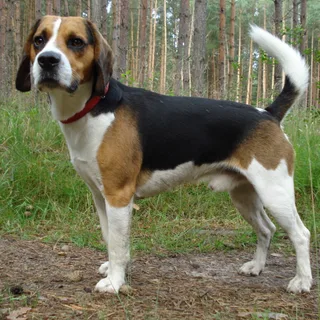
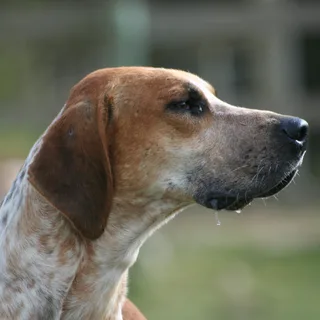
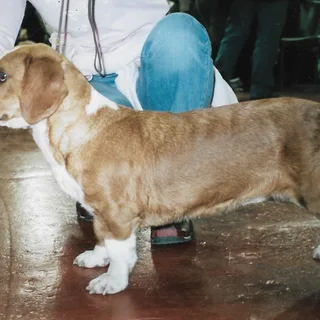
The Beagle is a medium-sized dog, compact, sturdy and well proportioned, without heaviness. Its head is expressive, with a moderately broad skull, long drooping ears, gentle eyes often brown or hazel and a well-developed nose favorable for scent work. The body is slightly elongated, the chest well let down, the limbs straight and the tail carried gaily. The coat is short, close, weather-resistant and is often found in tricolor or bicolor.
Temperament
Temperament and personality
The Beagle is a cheerful, affectionate and very sociable dog, generally close to its family as well as to strangers. It enjoys group life, often gets along well with other dogs and is generally patient with children. Its hunting instinct nevertheless remains very strong, which makes it curious, persistent on a trail and sometimes more attentive to scents than to its human's instructions.
Living together
Living with children and animals
On a daily basis, the Beagle is active, playful and always alert. He needs regular outings, scent games and varied activities to stay balanced. If he lacks exercise or stimulation, he can become noisy, prone to running away or destructive out of boredom. His powerful sense of smell encourages him to follow trails persistently, which requires good securing of the garden and particular vigilance during walks.
Training
Training and socialization
Beagle training must be consistent, patient and motivating. This dog understands well, but its independence and its interest in scents can limit its obedience if sessions are repetitive or not very engaging. Positive, short and regular methods give the best results, with early work on recall, leash walking and managing distractions. Good socialization and scent-search activities help it a lot to channel its energy.
Budget
Beagle price & budget
The purchase price varies depending on the puppy’s origin, the quality of breeding follow-up, the pedigree, the reputation of the line and the region. Beyond the initial cost, you should plan a regular budget for food, veterinary prevention, possible insurance and accessories. A well-maintained Beagle remains reasonably priced for its size, but it requires real consistency over time.
View cost breakdownHealth
Health at a glance
The Beagle is overall a rather hardy breed, but it is not free of points of vigilance. Its drooping ears promote certain ear conditions, and its pronounced appetite easily exposes it to overweight if the diet is not strictly controlled. Depending on the lines, a few endocrine, neurological or ocular disorders may also be observed.
Prevention & watch pointsDiet
Feed it well
The Beagle needs a complete, highly digestible diet adapted to its age, its actual weight and its activity level. As it easily tends to eat with enthusiasm, nutritional quality matters as much as precise control of quantities. A well-calibrated ration helps preserve its fitness, its joints and its longevity.
Our feeding adviceDid you know?
Anecdotes and popularity
The Beagle is famous for its exceptional sense of smell, which makes it both a renowned hunting dog and a very good detection dog in certain services. Its popularity has also been strengthened by popular culture, notably with Snoopy, often associated with its silhouette. Behind its gentle look hides a determined dog, capable of being very ingenious when a scent or food interests it.