Origins
Where does it come from?
The Tibetan Mastiff is a very ancient Asian breed traditionally used by the nomadic shepherds of the Himalayas and as a guard dog in Tibetan monasteries. Authors of Antiquity, including Aristotle, mentioned it, and Marco Polo also referred to it during his travel accounts. A male was offered to Queen Victoria in 1847, then the breed continued to gain Europe with the arrival of other specimens in England and the registration of one of the first litters at the Berlin Zoo in 1878.
Appearance
What does it look like?
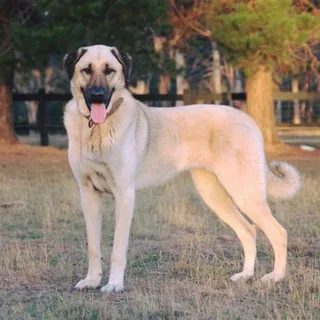
The Dogue du Tibet is a giant dog, powerful, serious and solidly built. Its back is straight and muscular, its chest fairly high, its croup broad and relatively flat. The head is broad and heavy with a thick muzzle with a square end, the eyes are oval and dark, the ears triangular and drooping. The tail, well furnished with hair, is set high and curls over the back in action. Its long and straight coat is doubled with an abundant and thick undercoat, with pure colors ranging from black to blue or golden, with or without tan markings.
Temperament
Temperament and personality
Protective, loyal to its family and very aware of its territory, the Tibetan Mastiff has a strong temperament. It often remains reserved with strangers, quite independent and not very demonstrative in its displays of affection. Its deterrent presence and natural seriousness make it an excellent guard dog, but its character can prove unpredictable if its socialization and supervision are not up to standard.
Living together
Living with children and animals
On a daily basis, the Tibetan Mastiff appreciates space, stable reference points and a calm family life. He is not hyperactive, but he needs regular outings to exercise and remain balanced. His guarding instinct is pronounced, which leads him to observe his environment carefully and to react to the approach of strangers. In an apartment, his size and his need for territory make cohabitation difficult.
Training
Training and socialization
The education of the Tibetan Mastiff must be early, consistent and firm without brutality. Its large size and dominant temperament require an experienced owner capable of establishing clear rules. Socialization from the youngest age is essential in order to get it used to other dogs, visitors and other animals. Leash work must also be started early to prevent it from becoming difficult to control once adult.
Budget
Tibetan Mastiff price & budget
The purchase price varies mainly depending on the quality of the bloodline, the seriousness of the breeding, the tests carried out on the breeding dogs and the relative rarity of the breed. With a dog of this size, you must also anticipate a substantial daily maintenance budget.
View cost breakdownHealth
Health at a glance
The Tibetan Mastiff is known to be robust and resilient, with a solid constitution suited to harsh conditions. This does not exempt it from careful veterinary monitoring, as certain conditions must be watched throughout its life, particularly in a dog of this size.
Prevention & watch pointsDiet
Feed it well
The Tibetan Mastiff needs a high-quality diet, complete and highly digestible, adapted to large or very large dogs. Its intake must support its slow growth and preserve its muscle mass without excess energy.
Our feeding adviceDid you know?
Anecdotes and popularity
The Tibetan Mastiff is one of the oldest known guard breeds. Its arrival in Europe in the 19th century greatly contributed to its notoriety, notably with the specimen offered to Queen Victoria. Its other name of Tibetan Mastiff recalls its geographical roots and its historical function as guardian of the high Himalayan plateaus.