Origins
Where does it come from?
The origin of the breed has long been debated, because the Dogue Allemand is indeed of German origin, even if it was very widespread in Denmark, hence its other name of Great Dane. It is said to descend from boar- and bull-hunting dogs of the Middle Ages, with ancestors often linked to the Tibetan Mastiff and the old Bullenbeisser. Modern breeding of the Dogue Allemand began in Berlin in 1878 and the first standard was established in 1880 before being taken up and adjusted by the FCI.
Appearance
What does it look like?
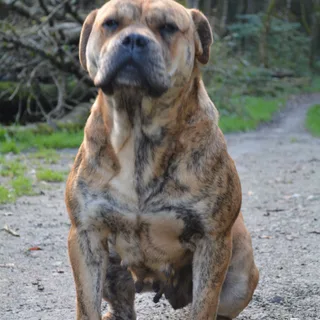
The Great Dane is a giant dog with an imposing yet harmonious appearance, often nicknamed the Apollo of the canine kind. Its body fits into an approximate square, with a long and finely chiselled head, a rectangular muzzle, ears set high and naturally drooping, as well as a tail set high that tapers toward the tip. Its coat is very short, smooth and glossy, and can be blue, black, harlequin, fawn or brindle.
Temperament
Temperament and personality
Powerful in appearance, the Great Dane is nevertheless a very affectionate companion, attached to its family and generally calm at home. Alert without being aggressive, it combines a strong deterrent presence with a gentle and protective temperament. It is generally good with children and sociable with strangers, while remaining more reserved with other animals.
Living together
Living with children and animals
One often imagines that a dog of this size needs an immense space, whereas the Great Dane adapts quite well to indoor life if it benefits from a stable environment and regular outings. It likes the company of its loved ones, tolerates a neglectful lifestyle poorly and needs sustained attention, especially during its growth. Its bark and its stature make it a natural guardian, even if it is not quarrelsome by nature.
Training
Training and socialization
The Great Dane needs early, consistent and controlled training because of its physical power. It must learn very young to walk without pulling and to respect clear rules, because an adult of this size becomes difficult to manage without good foundations. Even if it is not the most obedient, it is a receptive dog that understands well what is expected of it when the training is constant and calm.
Budget
Great Dane price & budget
The Great Dane requires an already significant acquisition budget, to which are added high maintenance costs due to its size, its diet and its health monitoring. The overall cost must be anticipated before any adoption.
View cost breakdownHealth
Health at a glance
The Great Dane requires careful monitoring, particularly during its first three years, because its growth is very rapid and its bone structure remains sensitive. Its large size puts more strain on its joints and requires properly adjusting exercise, diet and veterinary follow-up.
Prevention & watch pointsDiet
Feed it well
The diet of the Great Dane plays a major role in its bone development and quality of life. Its very rapid growth requires a complete, well-balanced ration that is regularly adjusted to avoid deficiencies as well as excessive intake.
Our feeding adviceDid you know?
Anecdotes and popularity
The Dogue Allemand is often nicknamed the Apollo of the canine race because of its noble and harmonious silhouette. It is also known under several names, including Danois, Deutsche Dogge, Grand Danois and Great Dane, but the French reference name remains Dogue Allemand.