Origins
Where does it come from?
The Dogue de Bordeaux is one of the oldest French breeds. It probably descends from the ancient Molossers of Aquitaine, sometimes associated with the Alan Vautre. Formerly used for guarding, hunting big game and driving livestock, it long remained very closely linked to the South-West of France. The breed declined sharply after the Second World War before being preserved by passionate breeders, then definitively recognized by the FCI in 1954.
Appearance
What does it look like?
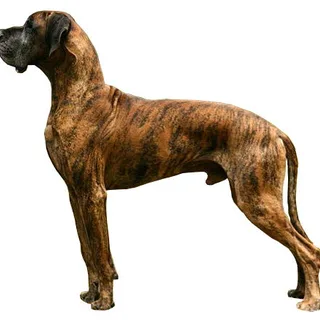
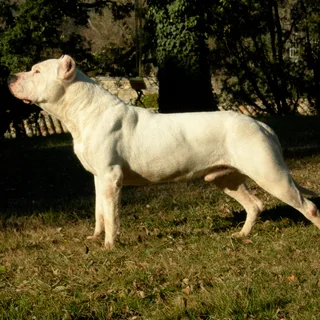
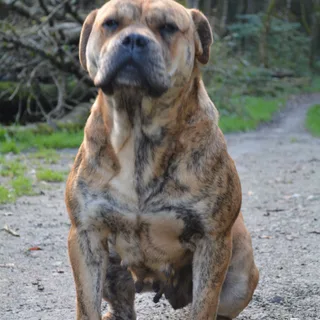
The Dogue de Bordeaux is a massive dog, very muscular and stocky, built in a harmonious way despite its volume. Its head is very broad, angular and marked by symmetrical wrinkles, with a very pronounced stop and a short muzzle. Its coat is short, fine and soft, in shades of fawn, sometimes with small white markings tolerated on the chest and the extremities.
Temperament
Temperament and personality
Affectionate and very close to his home, the Dogue de Bordeaux is calm, courageous and extremely protective. He is generally gentle with the children of his family and attached to his owner, while still keeping great strength of character. His past as a guard dog gives him a natural vigilance and a deterrent presence, without him being supposed to be aggressive if he is well socialized.
Living together
Living with children and animals
On a daily basis, he appreciates a stable family life and clear boundaries. He is not the most demonstrative in play nor the most athletic, but he needs regular walks to stay balanced. His size, his power and his tendency toward dominance in some individuals require good management of interactions with other dogs and strangers.
Training
Training and socialization
The education of the Dogue de Bordeaux must start early, with firmness, consistency and a lot of calm. This is not an ideal breed for a beginner handler, because a dog this powerful quickly picks up bad habits if the rules are not set from the start. Brutal methods must be avoided, whereas a stable framework, early socialization and regular work generally give good results.
Budget
Dogue de Bordeaux price & budget
The purchase price of the Dogue de Bordeaux varies depending on the quality of the bloodline, the reputation of the breeding kennel, the screenings carried out and the puppy’s intended purpose. The maintenance cost must also be anticipated, because its size and its health monitoring can increase the budget over the years.
View cost breakdownHealth
Health at a glance
The Dogue de Bordeaux is a dog solid in its behavior, but the breed remains overall delicate in terms of health and requires serious monitoring. Its large mastiff format exposes it to several orthopedic, cardiac, skin and ocular conditions. Rigorous breeding, well-controlled weight and appropriate screenings are particularly important.
Prevention & watch pointsDiet
Feed it well
The Dogue de Bordeaux needs a high-quality diet, highly digestible and suited to large-breed dogs. The growth phase deserves particular attention, as nutritional excesses can promote osteoarticular problems. It is wise to validate the ration with a veterinarian, especially in the puppy and the young adult.
Our feeding adviceDid you know?
Anecdotes and popularity
The Dogue de Bordeaux is often presented as one of the oldest French dogs. Its mastiff silhouette with a wrinkled face has also made it known to the general public in cinema, notably in the film Turner and Hooch. Despite its impressive appearance, enthusiasts of the breed emphasize above all its deep attachment to its family.