Origins
Where does it come from?
Very ancient dog breed, the Thai Dog has been attested for at least 360 years, mainly in the eastern regions of present-day Thailand. It was used for hunting, but also to protect carts and dwellings. Having long remained relatively isolated, the breed has been little modified by breeding and has retained a large part of its primitive characteristics. It is also known as the Thai Dog with a dorsal ridge and Thai Ridgeback Dog. The Fédération Cynologique Internationale classifies it in group 5 under number 338 and has recognized it definitively since 2003.
Appearance
What does it look like?
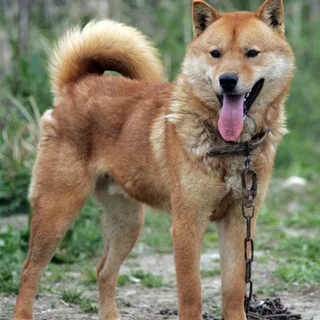
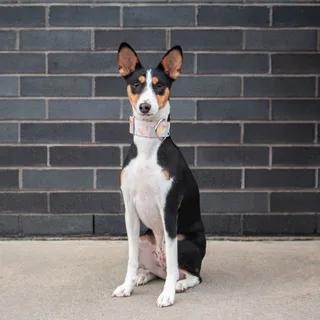
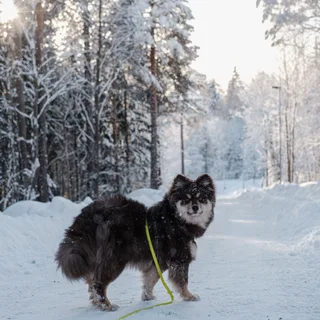
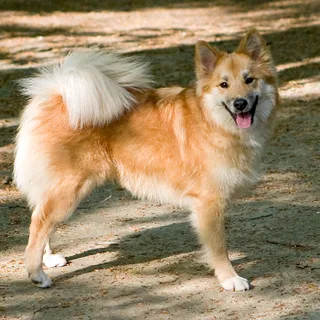
Of medium size, robust and harmoniously built, the Thai Dog has well-developed musculature and a body slightly longer than it is tall. Its back is straight and solid, its loin strong, its chest reaches down to the elbows and its belly is well tucked up. Its head, with a wedge-shaped muzzle, has erect triangular ears inclined forward. The almond-shaped eyes are dark brown, or amber in blue subjects. The tail, strong at the base, tapers towards its tip and is carried vertically, moderately curved. The short, smooth coat forms on the back a distinct ridge growing in the opposite direction. The coat is solid-coloured, red, black, blue or light fawn.
Temperament
Temperament and personality
Active, hardy and very loyal, the Thai Dog is attached to its family and has a balanced guarding instinct. Its primitive dog heritage gives it a certain independence, while its hunting aptitude remains pronounced. It can live with children and other animals if its socialization is early, gradual and well conducted.
Living together
Living with children and animals
Very energetic, he needs long and frequent outings, complemented by exercises, games and stimulating activities. Agile and a good jumper, he appreciates a large outdoor space that is solidly fenced. He can adapt to the city and to apartment living if his physical and mental needs are fully met, but he prefers to have a large secure garden.
Training
Training and socialization
His training must be firm, consistent and respectful, without brutality or a power struggle. Early, high-quality socialization is essential to channel his independence and develop good relationships with people, dogs and other animals. Intelligent, strong-willed and eager to cooperate with his owner, he makes good progress with regular, motivating and varied sessions. He is better suited to an experienced and available person.
Budget
Thai Dog price & budget
The purchase price varies depending on the breeder, the lineage, the pedigree, the age and the dog's conformity to the standard. As this breed remains uncommon, availability can also influence the cost.
View cost breakdownHealth
Health at a glance
Rustic, sturdy and resilient, the Thai Dog shows no marked general fragility. Regular veterinary monitoring remains necessary, notably for conditions known in the breed.
Prevention & watch pointsDiet
Feed it well
The Thai Dog needs a high-quality diet adapted to its age, its size and its level of physical activity. The daily ration is ideally divided into two meals.
Our feeding adviceDid you know?
Anecdotes and popularity
The characteristic dorsal ridge is formed by a strip of hair growing in the opposite direction to the rest of the coat. The breed is also called Thai dorsal ridge dog and Thai Ridgeback Dog. Its gaits are supple and free, suited to work and hunting.