Origins
Where does it come from?
The Finnish Lapphund was traditionally used by Lapp herders to guard and drive reindeer herds, a task in which its endurance, vigilance and voice proved particularly effective. The development of the modern breed notably benefited from contributions from the German Shepherd and the Collie. Registered in the studbook as early as the 1950s, it was long recorded together with the Finnish Lapphund before the official separation of the two breeds was decided in December 1992. The Fédération Cynologique Internationale recognized it definitively on 13 November 1970.
Appearance
What does it look like?
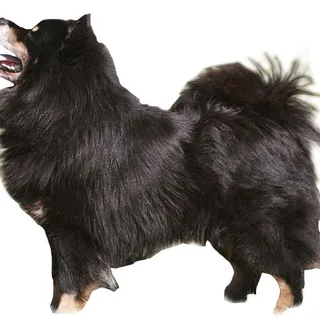
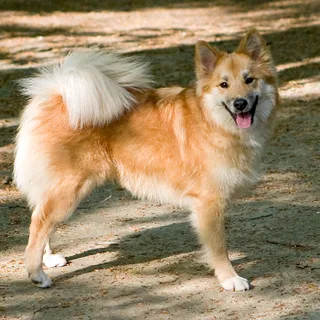
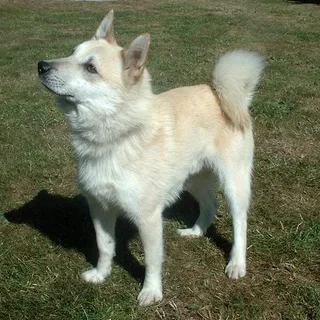
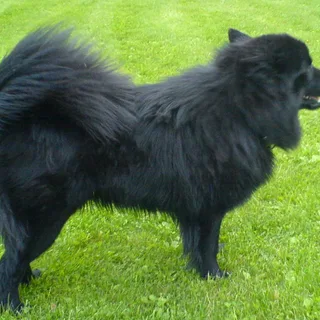
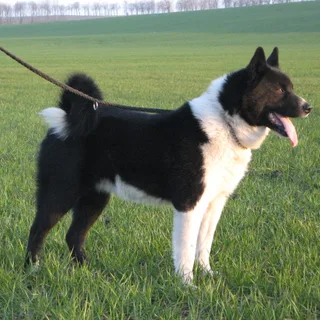
The Finnish Lapphund is a medium-sized herding dog, of spitz type, solidly built and muscular without appearing heavy. Its body, clearly longer than tall, fits into a rectangle with a marked withers, a strong back, a short loin, a long and slightly sloping croup as well as a well let-down chest. Its rather long head has a muzzle slightly shorter than the skull, erect ears, well set apart and very hairy, as well as dark oval eyes with a lively and humble expression. Its tail, set low and abundantly furnished, hangs at rest then curls in action. The straight, stiff and erect coat, of medium to long length, covers a fine and dense undercoat. The coat shows all shades of black, including greyish or dark brown, with lighter markings on the head, the underside of the body and the limbs.
Temperament
Temperament and personality
Energetic and full of enthusiasm at work, the Finnish Lapphund knows how to be calm, friendly and docile with its owners. Very attached to its family and eager to cooperate, it generally gets along well with children and other animals when it has been properly socialized. Vigilant and naturally vocal in action, it can also effectively fulfill the role of guard dog without losing its balance or its sociability.
Living together
Living with children and animals
This working dog needs space, movement and regular activities. Used to wide open spaces and prolonged travel, it does not thrive in a confined or sedentary life. Long daily outings, search games, obedience exercises and outdoor activities help it stay balanced. It can live in the city if its owner is very available, but a house with a large fenced garden meets its needs much better.
Training
Training and socialization
The training of the Finnish Lapphund is generally accessible thanks to its obedience, intelligence and desire to please. It must start early and combine gentleness, patience, consistency and measured firmness. Varied socialization helps to channel its vigilance and its vocal expression. Short and dynamic sessions, based on reward and cooperation, maintain its motivation much better than harsh or repetitive methods.
Budget
Finnish Lapphund price & budget
The price of a Finnish Lapphund depends in particular on the lineage, the quality of health monitoring, socialization, the reputation of the breeding kennel and the rarity of the breed. The purchase cost must not be the only selection criterion.
View cost breakdownHealth
Health at a glance
The Finnish Lapphund is a particularly robust dog, renowned for its good overall health. Its dense double coat protects it effectively from cold and bad weather. The breed standard does not indicate any particular predisposition to a disease, but regular veterinary monitoring remains essential as for any active dog.
Prevention & watch pointsDiet
Feed it well
The Finnish Lapphund needs a complete, digestible diet adapted to its age, its weight, its body condition and its activity level. Its needs can vary greatly between a moderately active companion dog and an individual that works or regularly practices a canine sport.
Our feeding adviceDid you know?
Anecdotes and popularity
The Finnish Lapphund is also known as Lapinporokoira. Its historical specialty is herding reindeer in Lapland territories. Although it once shared the same registration with the Finnish Lapphund, it is today a distinct breed, recognizable by its more elongated silhouette and its profile of a true Nordic herding dog.