Origins
Where does it come from?
The Icelandic Sheepdog arrived in Iceland with the first Viking explorers from the 9th century onwards. Over the generations, selection has favored dogs capable of gathering and driving herds over vast terrain, despite the cold, wind and bad weather. Remaining rare outside its country of origin and the Scandinavian countries, the breed also appeals as a family dog thanks to its gentle and cheerful temperament. The Fédération Cynologique Internationale definitively recognized it on 17 February 1972 under number 289.
Appearance
What does it look like?
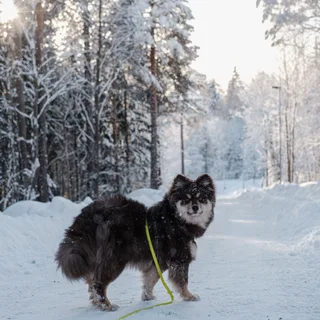
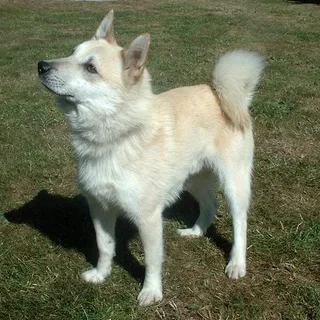
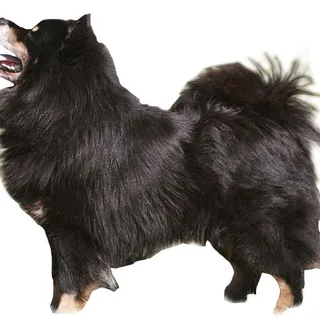
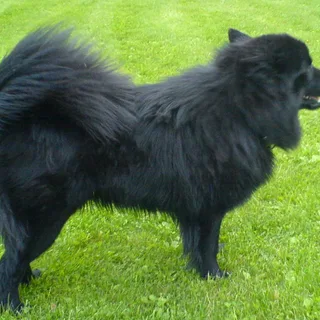
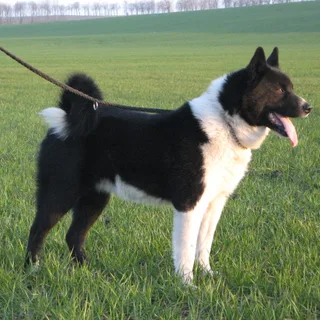
Of medium size but below the average of herding dogs, the Icelandic Sheepdog has a robust, rectangular silhouette. Its triangular head has medium ears, erect, mobile and slightly rounded at the tip, as well as almond-shaped eyes generally dark brown. Its tail, set high, curls over the back. The double coat combines a medium-long to long outer coat, fairly harsh, with a soft and very dense undercoat. Coat colors can be fawn, from cream to reddish brown, chocolate, grey or black, with irregular white markings; a black mask is possible in fawn or grey subjects.
Temperament
Temperament and personality
Cheerful, playful, curious and friendly, the Icelandic Sheepdog readily seeks contact with its family and generally welcomes visitors without aggression. It retains a strong instinct for herding and readily uses its voice to signal a movement or a presence. Lively and attentive, it combines gentleness, confidence and intelligence, while being able to show enthusiasm and sometimes be noisy.
Living together
Living with children and animals
Active working dog, he needs to take part in daily life, to exercise and to be mentally stimulated. Two long walks per day, complemented by games, tracking, agility or herding exercises, contribute to his balance. Rural life or a house with a fenced garden suits him better than an apartment, even if an urban adaptation remains possible with frequent outings and real availability.
Training
Training and socialization
His desire to learn and to please makes training easier, but his energy and his tendency to vocalize require consistency. A positive method, based on reward, gentleness and clear boundaries, gives the best results. Early socialization with people, dogs and other animals is important, as is the gradual learning of calmness, recall and control of barking.
Budget
Icelandic Sheepdog price & budget
The price depends on the pedigree, the quality of the screenings carried out on the parents, the reputation of the kennel and the puppy’s destination. The relative rarity of the breed can also increase travel costs or lengthen the waiting time.
View cost breakdownHealth
Health at a glance
Rustic and well protected by its double coat, the Icelandic Sheepdog generally enjoys robust health. Responsible selection and regular veterinary monitoring remain essential to limit the joint and eye disorders observed in the breed.
Prevention & watch pointsDiet
Feed it well
Athletic and muscular, the Icelandic Sheepdog needs a complete diet whose energy density truly matches its activity. The ration must preserve its muscle mass without promoting unnecessary weight gain.
Our feeding adviceDid you know?
Anecdotes and popularity
The Icelandic Sheepdog is the only native dog breed of Iceland recognized internationally. Its loud bark had a practical function: it helped the shepherd to direct the herds and to signal animals that had strayed on difficult terrain. Its curled tail, its erect ears and its thick undercoat bear witness to its belonging to the group of Nordic spitz.